Coffee Bar Ideas for Small Spaces: 14 Layouts
Fourteen coffee bar ideas for small spaces, from a 24-inch counter run to a cabinet-door setup, with the real measurements and the caveats for each one.
Skip to the goods in this piece (6) ↓
Most coffee bar ideas for small spaces assume a spare stretch of wall that nobody actually has. The setups below work in the space that already exists: a strip of counter, the underside of a cabinet, the back of a pantry door. Each one comes with what it takes and where it tends to go wrong.
1. Claim a 24-Inch Run of Counter
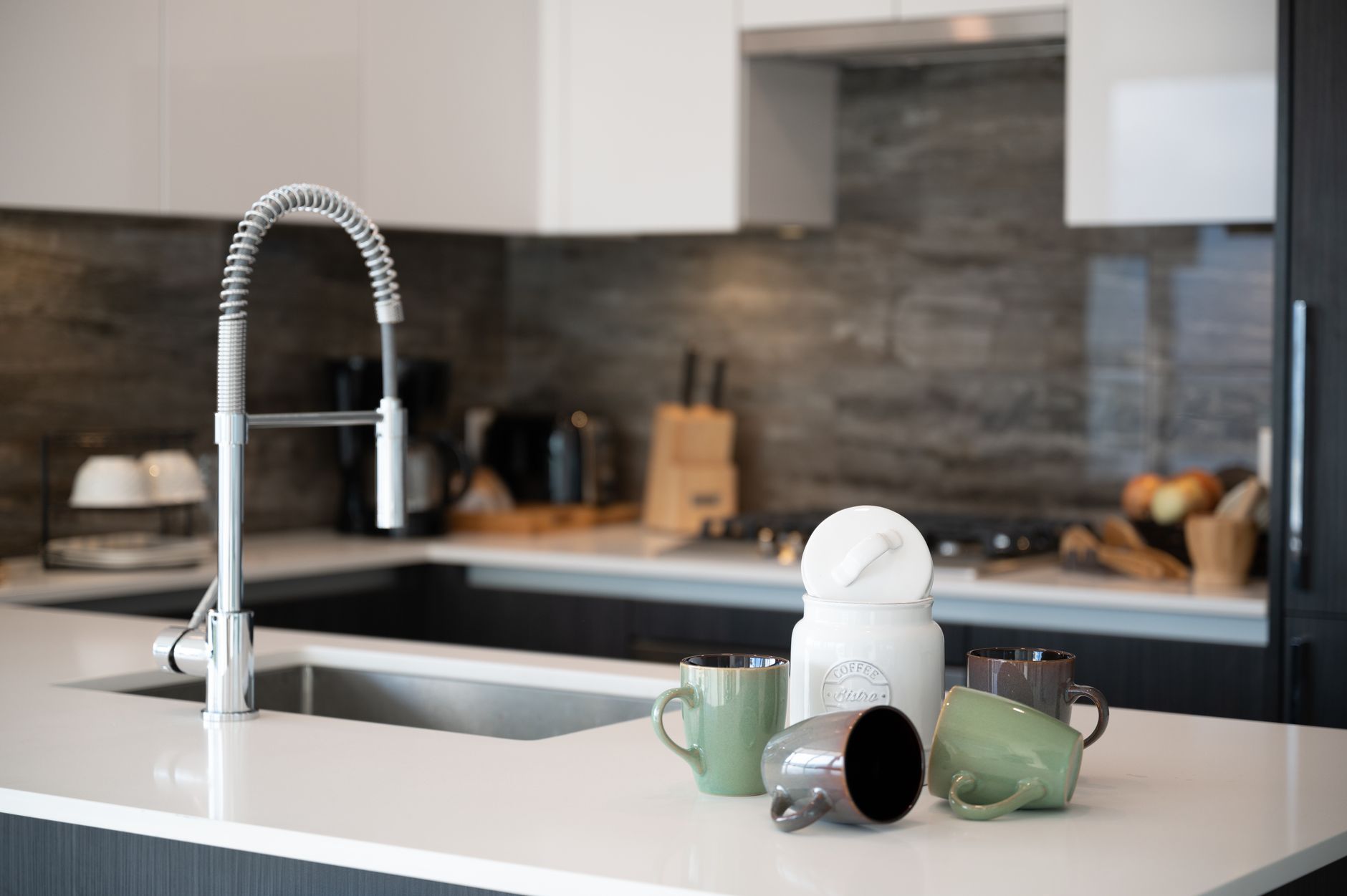
A drip machine, a grinder, and somewhere to set the mug need roughly 24 inches of linear counter, about the width of a dishwasher. Width turns out to be the easy part. Depth is the constraint that decides everything else: standard upper cabinets hang 12 inches deep and leave about 18 inches of clearance above the countertop, so a machine taller than that has to sit forward of the cabinet line or move somewhere else entirely. Measure that vertical gap before buying anything, because plenty of espresso machines land between 14 and 16 inches and then need the water tank lid to open on top of that.
2. Floating Shelf Directly Over the Machine
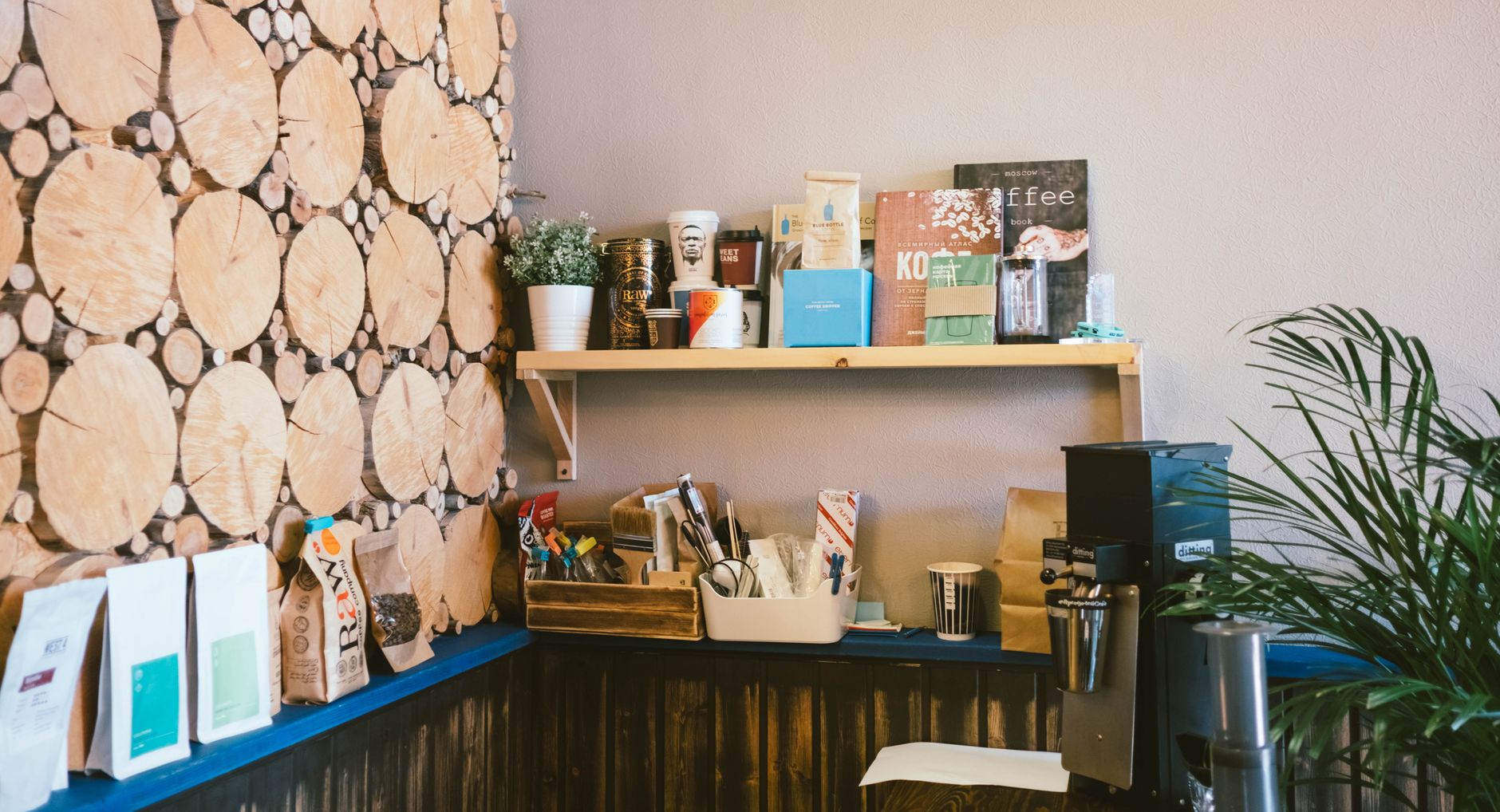
Vertical storage is free on a small coffee bar, and one shelf above the machine gets mugs and beans off the working surface. A 6-inch-deep shelf holds a single row of mugs and a canister; a 10-inch shelf holds two rows but starts reading like a cabinet with the door taken off. Mount into studs or use toggle bolts rated well past the load, since a dozen stoneware mugs clears ten pounds before the shelf itself is counted.
3. The Tray Trick
A tray in the 12-by-18 range turns six scattered objects into one object, which is most of what “organized” means visually. It also means the entire station lifts off in one motion when the counter needs wiping, and that is the reason this one survives long term instead of getting abandoned. Choose a low lip; anything much over an inch makes sliding a mug on and off irritating enough that people quietly stop using the tray. A low-lip wood serving tray is the standard pick because the warm tone reads as furniture rather than kitchen equipment.
4. A Narrow Rolling Cart Parked in the Gap
Utility carts in the 30-to-32-inch height range clear a standard 36-inch counter, so one can live in the dead gap beside the refrigerator and roll out only when it is in use. The genuinely narrow models run about 7 to 8 inches deep and fit slots a trash can cannot. Small casters handle hardwood and tile and stall on thresholds and rug edges, so a narrow 3-tier rolling cart only earns its keep on continuous hard floor. There is more on sizing and caster choice in coffee cart ideas.
5. Mug Hooks on the Cabinet Underside
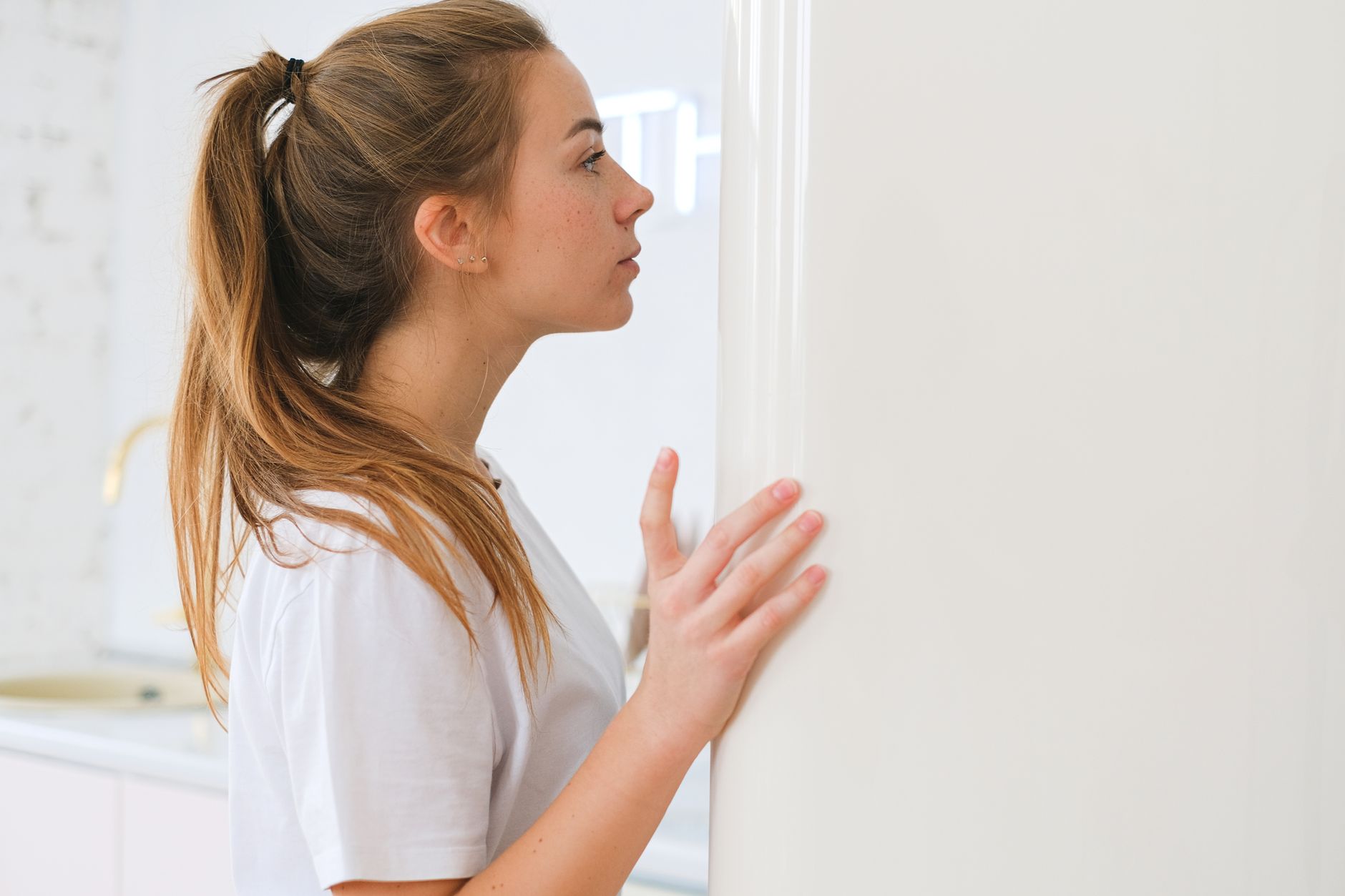
Screw-in cabinet mug hooks hang mugs about four to five inches down, which still leaves roughly 13 inches of working clearance inside a standard 18-inch gap. Two staggered rows front to back hold four mugs in the depth a single row uses for two, provided the handles all face the same way. Pre-drill the pilot holes. Cabinet bottoms are frequently half-inch plywood or thinner, and driving a hook in dry splits the veneer along the grain.
6. Turn One Cabinet Into an Appliance Garage
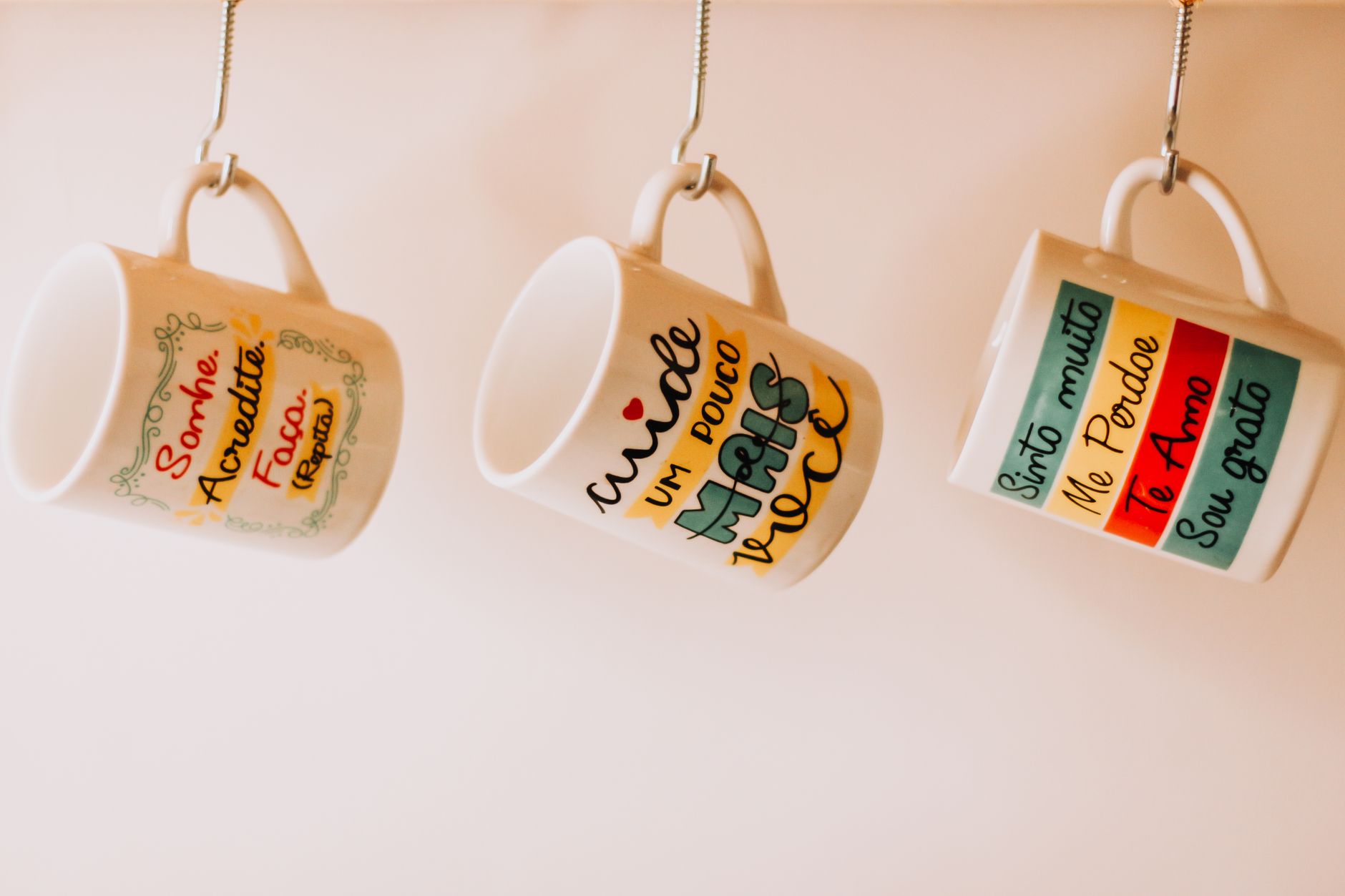
Pulling the middle shelf out of a single base or upper cabinet creates a hiding place for the machine, and an electrician can add an outlet inside the box so nothing has to be unplugged. The trade is a two-step morning: the door opens, the machine slides forward, and only then does it get used. Worth knowing about before committing, since a machine that lives behind a door gets used measurably less than one sitting out. Cabinet depth, door swing, and the outlet question are covered in more detail in the coffee bar cabinet guide.
7. Add a Pull-Out Shelf for Anything That Steams
Kettles and espresso machines vent upward, and a cabinet bottom sitting 18 inches above catches all of it. Over a couple of years that shows up as bubbled finish or delaminated veneer directly above the machine. A pull-out shelf on drawer slides lets the machine come forward into open air before it runs, which solves the moisture problem without giving up the cabinet.
8. Two-Tier Riser for Vertical Stacking
The stepped riser sold for spice jars works better as a mug and pod stand, doubling what fits inside a footprint about the size of a sheet of paper. Keep the machine off it. Risers are stable under static weight and not under the shove of a portafilter being locked in, and a two-tier counter riser is not rated for that kind of lateral force.
9. Take the Dead Corner
Every L-shaped kitchen has a corner where two counter runs meet and nothing useful happens, usually because the upper cabinet above it is a blind box and the counter beneath is hard to reach past. That corner is the cheapest 20 inches of countertop in the house, and syrups and canisters do not care that reaching them is awkward. Put the frequently touched items on the outside edge and let the corner hold backstock. A turntable in the corner itself makes the awkward reach a spin instead, which is the difference between the back row getting used and the back row being where old bottles go to sit.
10. Move Pods and Tools Into the Drawer Below
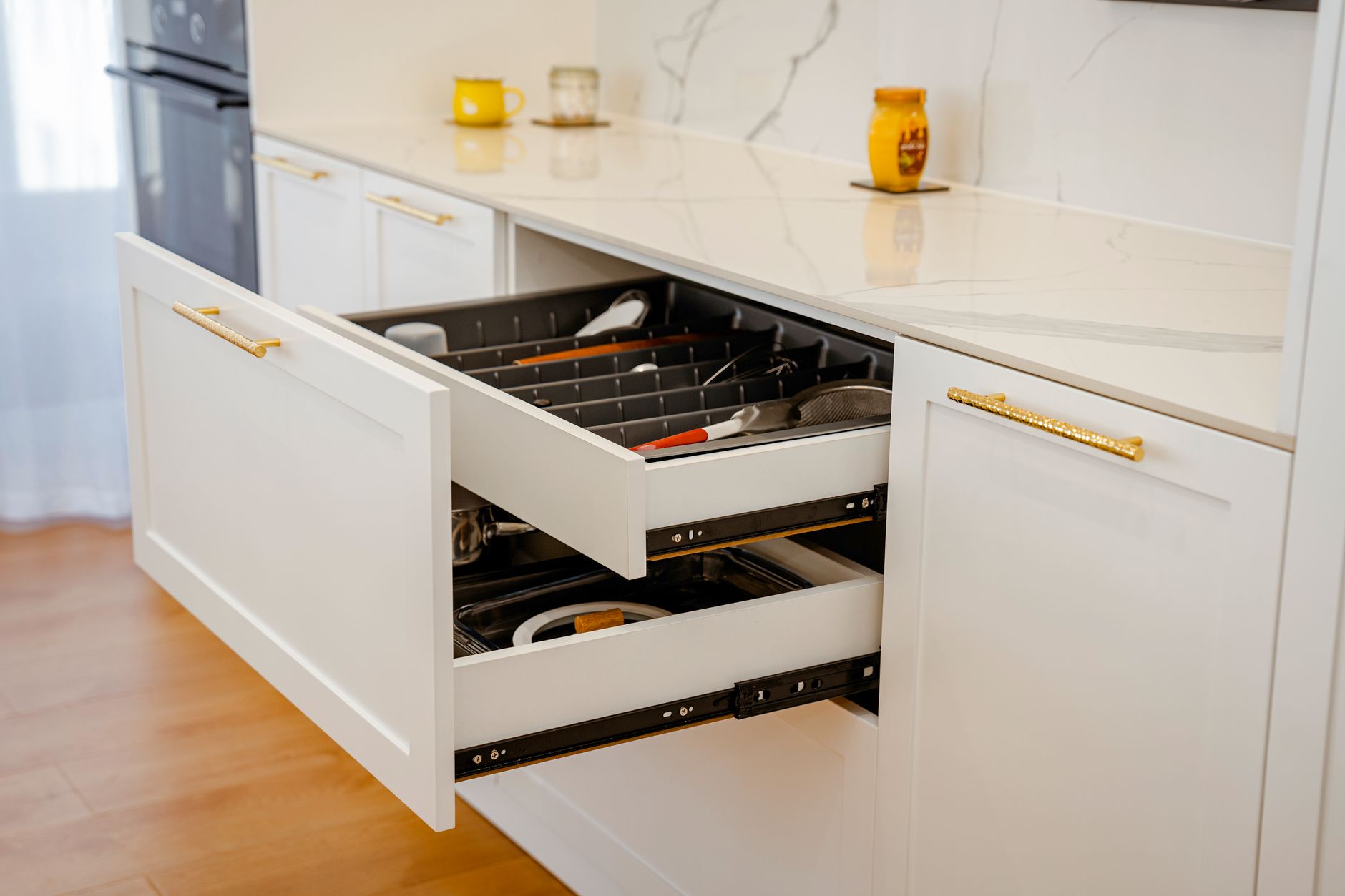
A standard 21-inch drawer directly beneath the station holds pods, filters, spoons, and a scale, which clears the counter of everything except what actually runs. Shallow inserts keep pods in rows instead of a loose pile. Skip this drawer for whole beans if it sits next to the dishwasher, since that cabinet run gets warm and humid on every cycle.
11. Over-the-Door Organizer on the Pantry Door
Clear-pocket organizers hung on the inside of a pantry door hold pods, tea, filters, and sugar packets vertically, on a surface that was doing nothing. Measure the gap first: most pantry shelves sit two to three inches back from the closed door, and a loaded pocket organizer needs about that much to swing without catching. Sleeved pods slide in and out of the pockets more cleanly than loose ones.
12. Wall-Mounted Drop-Leaf Ledge
A hinged fold-down ledge gives a working surface in a galley or a rental where no counter is available, then folds flat against the wall between uses. It needs to hit studs, and the bracket has to be rated for downward load rather than shelf load. Check the swing arc against the doorway and the nearest chair before mounting, because a ledge that blocks traffic gets folded up permanently.
13. Peel-and-Stick Backsplash as a Border
A small coffee bar reads as intentional when the wall behind it changes. Two square feet of peel-and-stick tile does that without a wet saw or a landlord conversation. A peel-and-stick tile backsplash needs a smooth, clean, semi-gloss or satin wall to bond to; flat paint and orange-peel texture both let it lift at the corners within a season.
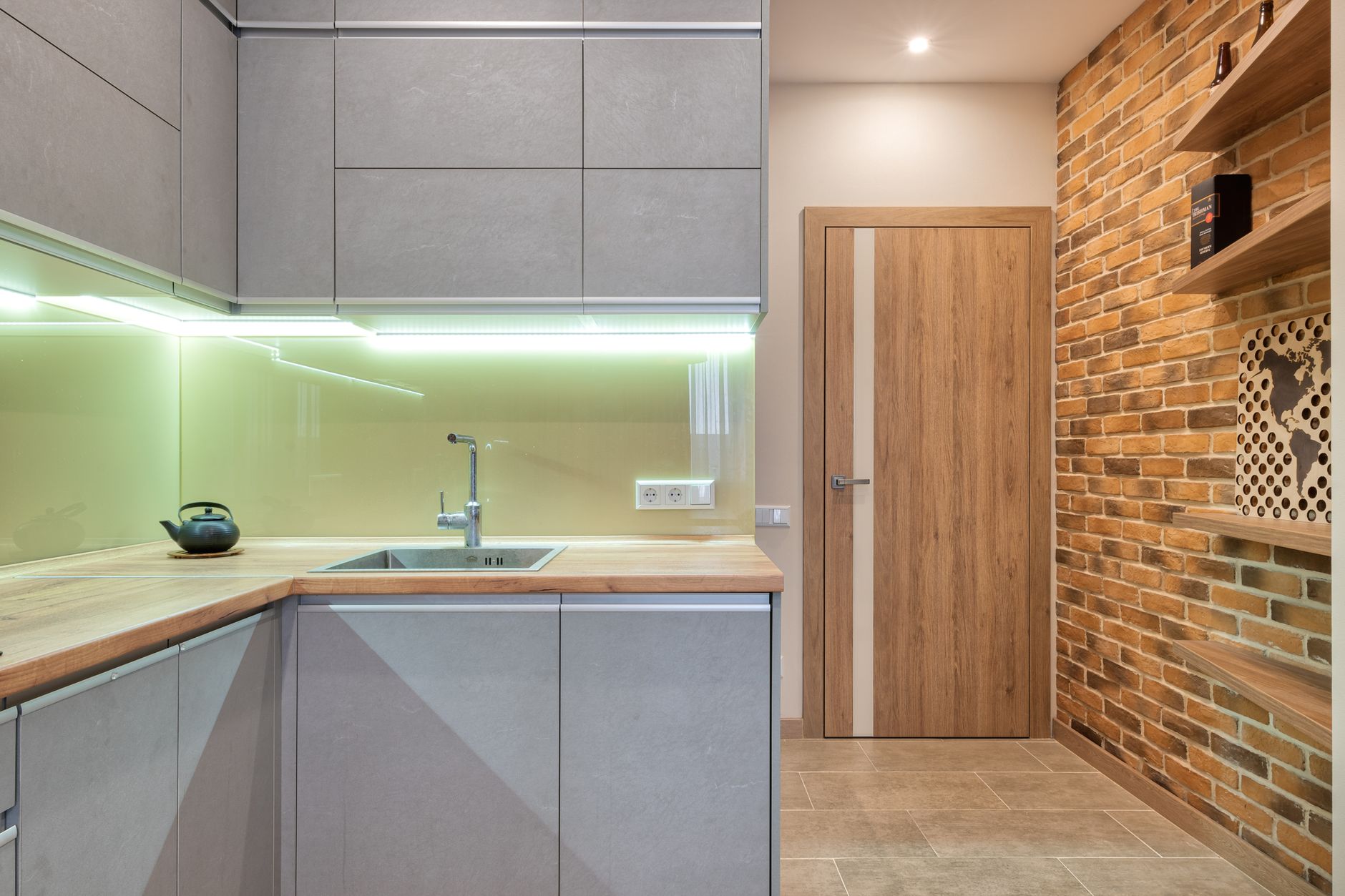
14. Under-Cabinet Lighting to Finish the Edge
Light is what separates a defined station from a group of appliances that happen to be adjacent. Puck lights throw visible scallops on the backsplash, while a diffused bar gives an even wash, and a rechargeable under-cabinet LED bar sticks up magnetically with no wiring. Stay in the 2700K to 3000K range; anything cooler makes a wood shelf and a stoneware mug look like a laundry room.
Working Order
The sequence that tends to hold up: measure the vertical gap first, since it eliminates half the machines on any shortlist. Then define the footprint with a tray or a slab. Storage comes third, going up the wall and down into the drawer before anything else gets added to the counter. Lighting last, because it only reads well once the arrangement underneath it has stopped changing.
Small stations fail on volume more than on layout, so keeping backstock out of the working zone matters more than any single organizer does. The container-and-labeling side of that is worked through in coffee station organization, and renters working around cabinets they cannot modify will find more workable versions in apartment coffee bar ideas.
Some links in this article are affiliate links — if you buy through them we may earn a commission at no extra cost to you. Details.