Apartment Coffee Bar: 12 Renter-Friendly Setups
Twelve apartment coffee bar ideas built for renters: no drilling, no painting, a cart that leaves at lease end, and peel-and-stick that comes back off clean.
Skip to the goods in this piece (6) ↓
An apartment coffee bar is a constraints problem, not a design problem. The counter is short, the walls are someone else’s, and every hole and every coat of paint is a line item against the deposit. Twelve ideas that work inside those limits are below, starting with the one most people skip.
1. Start at the outlet, not the aesthetic
Find the outlet first and build outward from it. This sounds obvious until the cart is styled, loaded, and sitting eighteen inches past the reach of a 30-inch appliance cord, which is roughly what most drip machines ship with.
Two things to check before anything else moves. First, cord length on every device that will live there — measure it, do not estimate. Second, what else is on that circuit. A 1,500-watt kettle and a 1,200-watt drip machine running at once on a shared 15-amp kitchen circuit is right at the edge, and older buildings are frequently on the wrong side of it. If the microwave trips the breaker when the toaster is on, the coffee station belongs on a different wall.
2. Twenty-four inches is a coffee bar
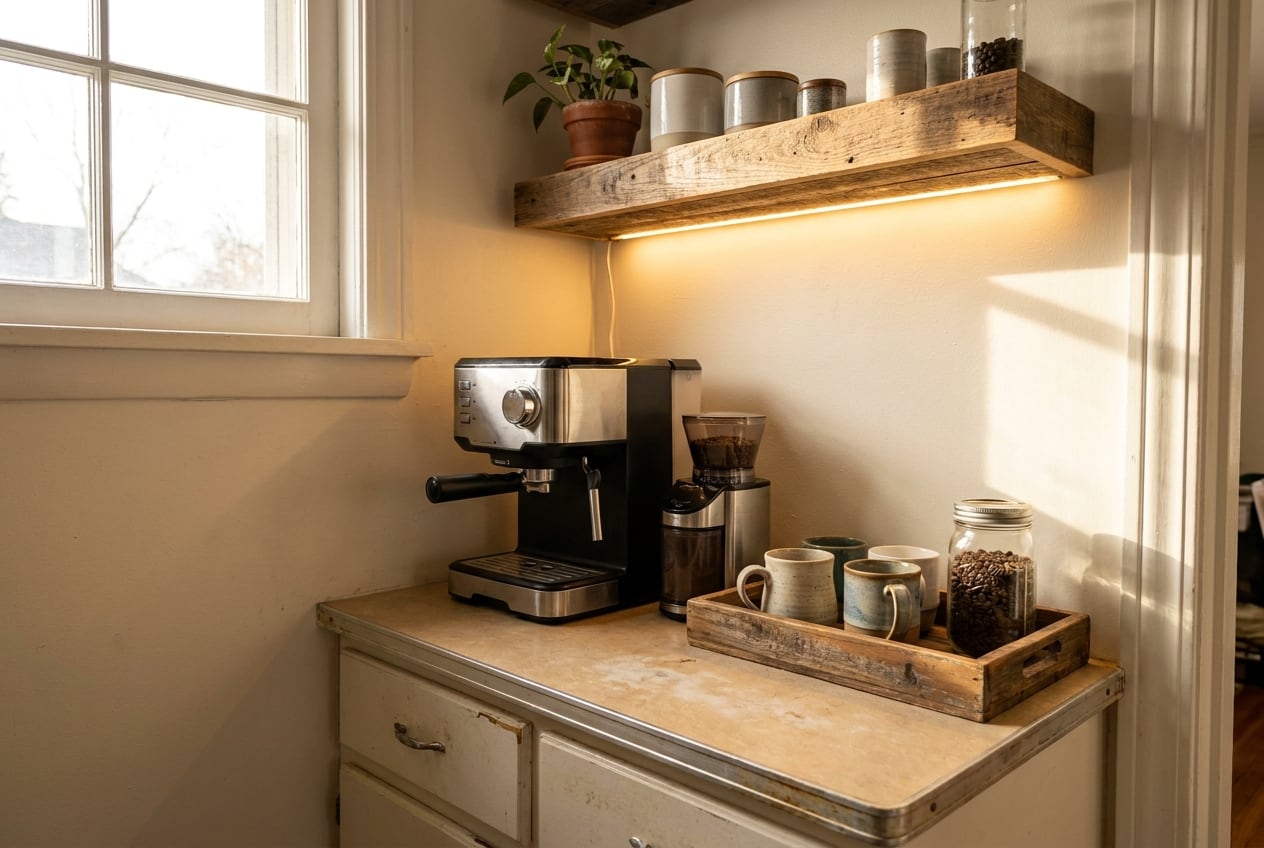
The strip beside the refrigerator, the dead end of an L-shaped counter, the two feet next to the sink that collect mail. Any of those is enough. A drip machine occupies roughly 8 by 12 inches, a burr grinder about 6 by 10, and a mug needs a hand’s width around it.
What ruins that footprint is not the equipment. It is the bag of beans, the box of filters, the sleeve of cups, and the two travel tumblers that never make it back to the cabinet. Twenty-four inches works fine for the machines and fails immediately for the packaging, which is the argument for idea eleven.
3. The cart is the renter’s answer
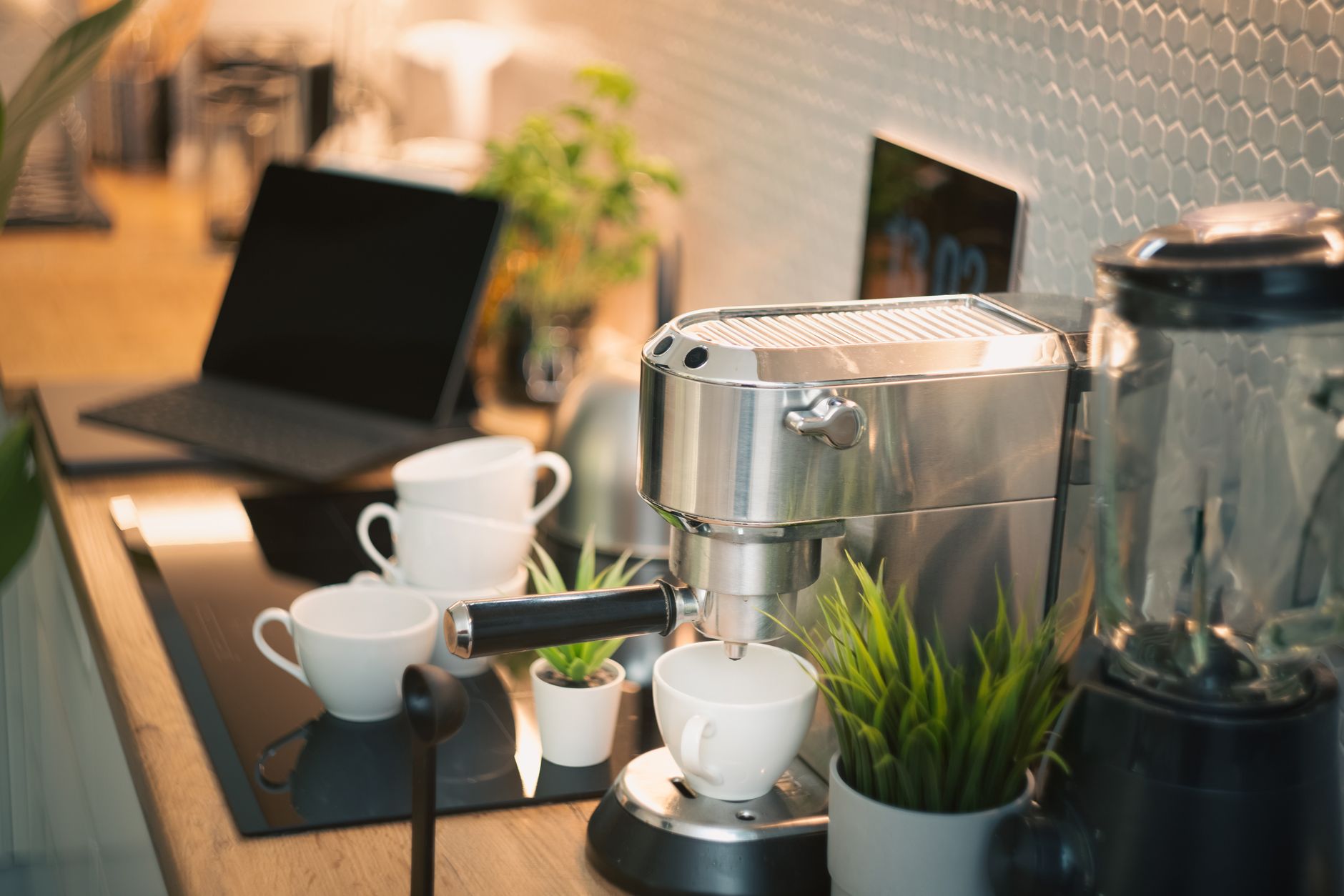
If the kitchen genuinely has no free counter, a rolling kitchen cart is the answer, and it is a better one than most built-in solutions. It adds a surface without touching a wall, it rolls out for cleaning behind it, and on the last day of the lease it leaves through the door in one piece.
Sizing that actually works: about 30 to 34 inches tall so it matches standard counter height, 16 to 20 inches deep so it does not block a walkway, and locking casters, which is not optional on a cart holding a kettle. Metal frames read modern, wood-topped ones read warmer, and a cart with a lower shelf gives the packaging somewhere to go.
The one thing to check is the wheel path. A cart that has to cross a threshold strip or a thick rug is a cart that stops rolling by month two. A fuller breakdown of layouts and models lives in coffee cart ideas.
4. Build up, not out
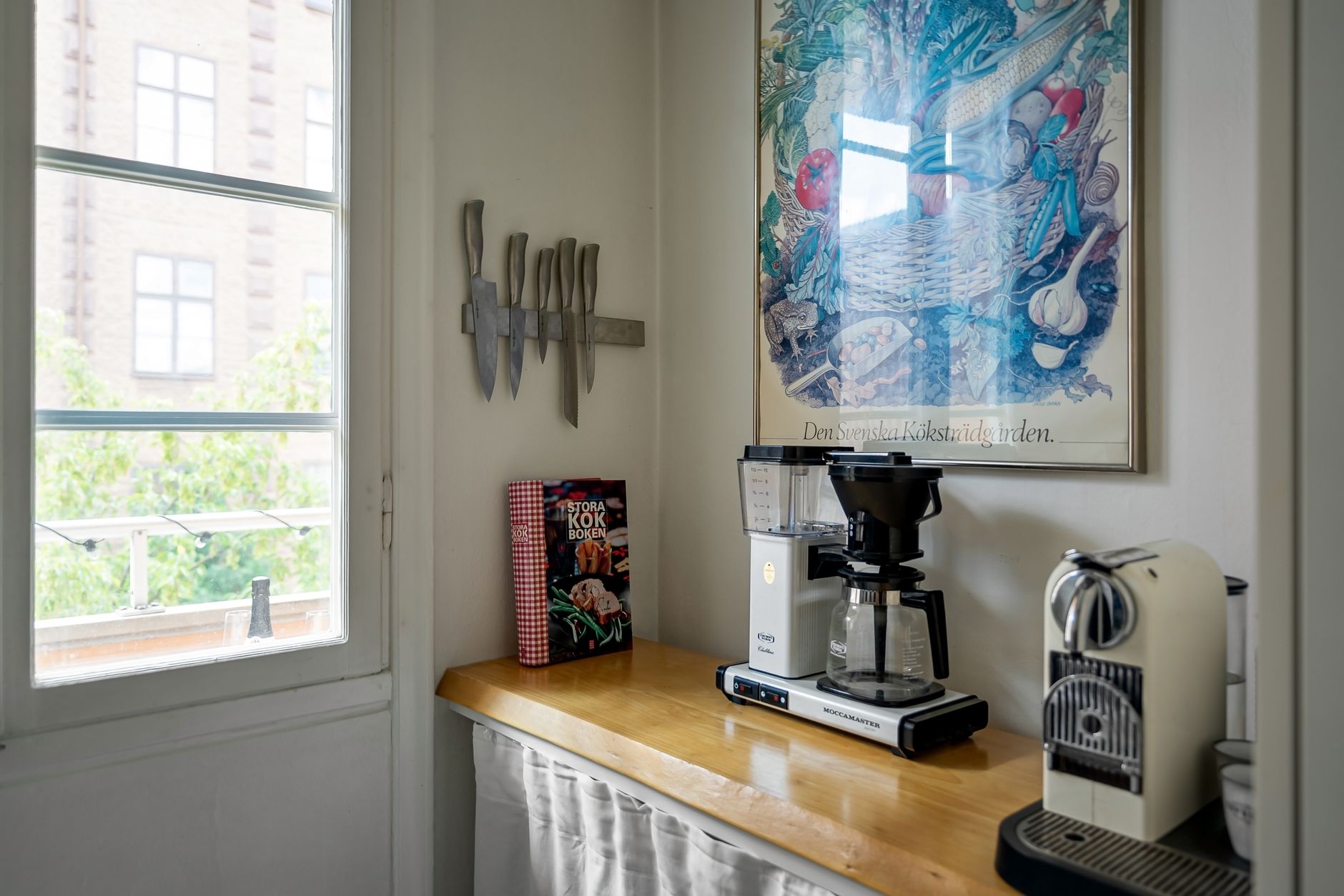
The wall above a rental counter is usually the largest unused space in the kitchen and the one renters are most afraid to touch. Correct instinct, wrong conclusion — the fix is a freestanding tower rather than floating shelves.
A narrow shelf unit roughly 12 inches deep and 30 to 40 inches wide sits on the counter or on the floor beside it, holds three to four tiers of supplies, and requires nothing but a level surface. Anti-tip straps come with many of them; use them if there is a stud to hit and skip the unit entirely if there is not and it is tall. Short and wide beats tall and narrow in a rental every time.
5. Peel-and-stick backsplash, applied so it comes back off
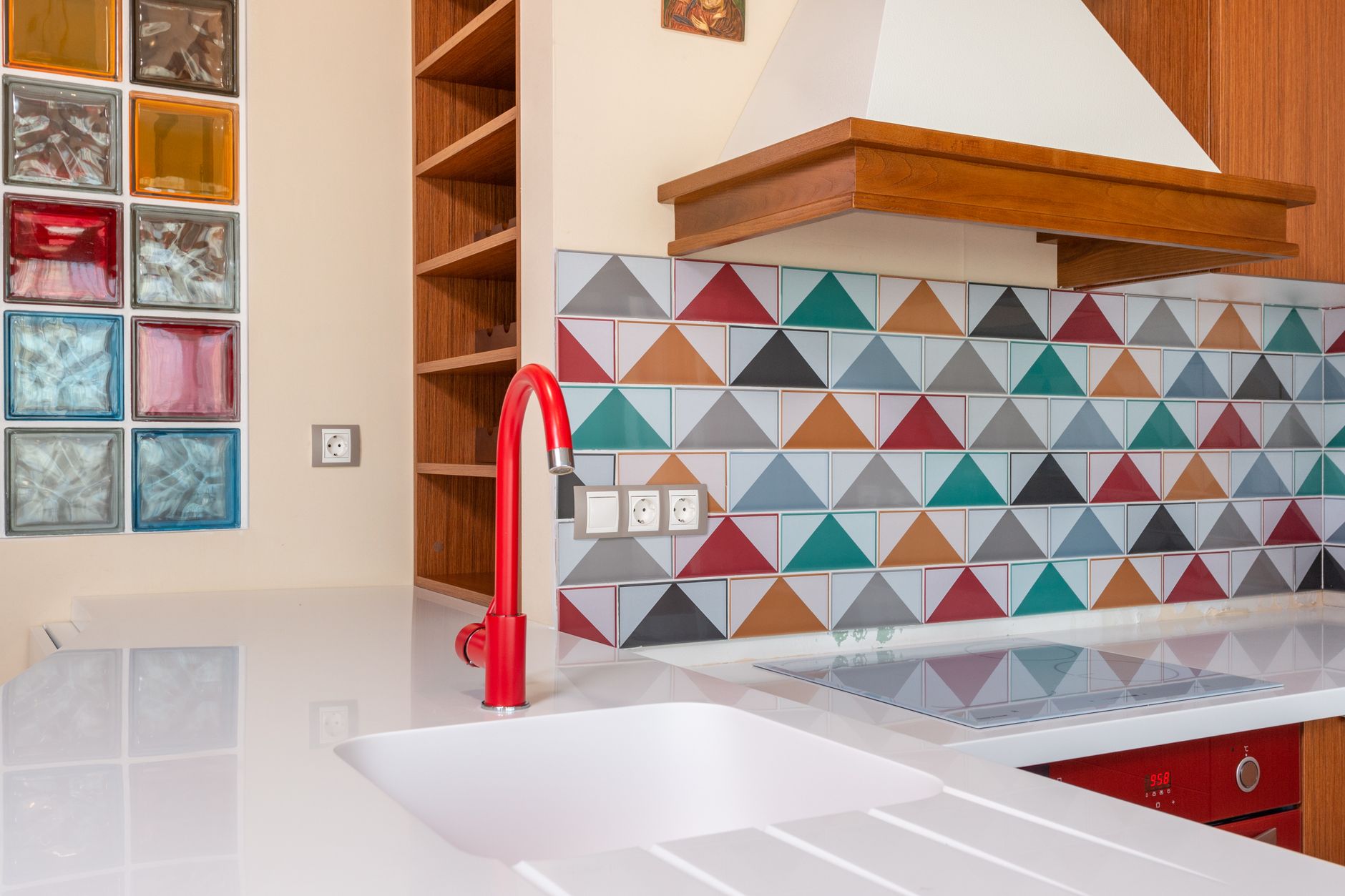
Peel-and-stick tile behind the station is the highest-impact renter move available, and the one most likely to cost a deposit if done carelessly. The variable is the wall finish, not the tile.
Semi-gloss and satin paint release adhesive cleanly. Flat and matte paint does not — it comes off with the tile, in sheets, taking drywall paper with it in the bad cases. Textured walls fail outright because the adhesive only contacts the high points. Before committing, test one tile on an inconspicuous patch of the same wall, leave it a full week, and pull it slowly at a shallow angle.
Three more rules worth following. Clean the wall with a degreaser first, because kitchen walls carry a film that defeats adhesive. Keep the tiled area to the width of the station rather than running the whole wall, which looks deliberate and cuts the removal risk. And photograph the bare wall before the first tile goes up — that image is the only evidence of prior condition anyone will accept at move-out.
6. Adhesive hooks: the rating is the whole story
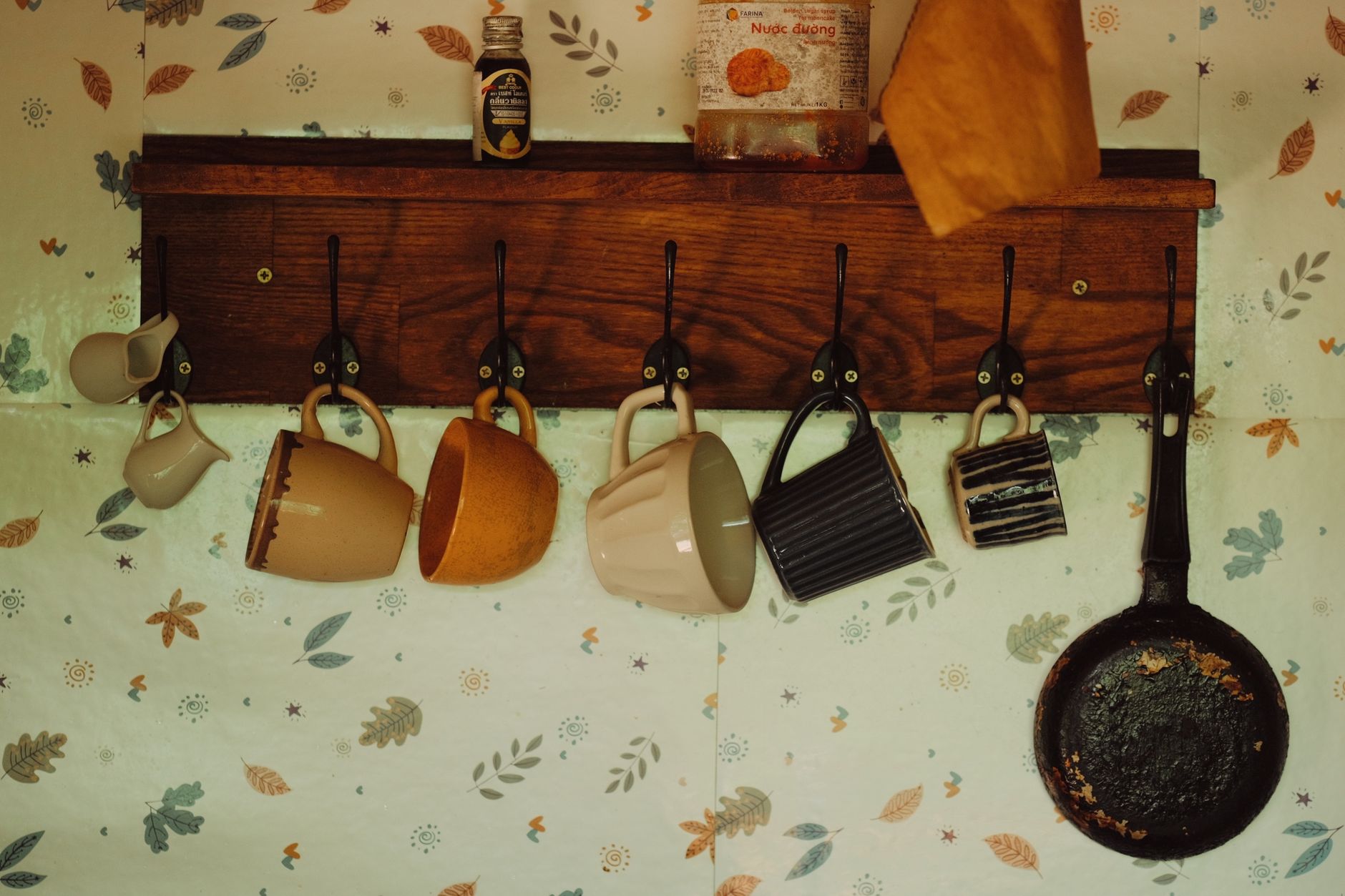
Hanging mugs frees counter space and is the single best use of adhesive hooks in a kitchen. The failures are predictable and all come from the same source — treating the weight rating as a suggestion.
A stoneware mug runs roughly 12 to 16 ounces empty. A medium adhesive hook is commonly rated around three pounds. That math works, right up until the hook goes on a wall that gets warm, or humid, or was wiped with a cleaner that left residue. Mount hooks under a shelf lip rather than on open wall where possible, give the adhesive the full cure time on the package before loading anything, and hang mugs by the handle rather than looping them over.
Steam is the quiet killer. Adhesive directly above a kettle or in the path of dishwasher venting will let go, usually at night.
7. A tray is the footprint
One tray under the machine does three jobs in a rental. It draws a visual boundary so the station stops migrating along the counter. It catches grounds and drips, which matters when the counter is laminate and the lease mentions stains. And it lets the entire setup slide aside in one motion when the counter is needed for cooking.
Match the tray to the machine footprint plus a few inches, not to the counter. A tray sized to the counter is just a counter with a lip.
8. Shrink the machine before you shrink the space
Small kitchens are usually solved by buying the wrong thing smaller. Worth considering instead: whether the format itself fits the space.
A pour-over cone and a gooseneck kettle take up less than a drip machine, store in a drawer, and disappear entirely between uses. A French press has no footprint when it lives in a cabinet. A single-serve machine is the smallest of the always-plugged-in options. The heaviest space cost in most apartment setups is a full-size espresso machine plus a grinder plus a knock box — that combination needs a real 30-inch run, and putting it on 18 inches produces a station nobody enjoys using.
9. Solve the water walk
Nothing kills a beautiful cart faster than being twelve feet from the tap. Every fill becomes a trip, and after a week the cart stops getting used.
If the station cannot be near the sink, keep a lidded carafe or a two-liter glass bottle on it, filled once a day. It looks intentional, it works, and it removes the friction that quietly retires most apartment coffee stations. Machines with removable reservoirs help more than machines with fixed ones, which is worth weighing before buying.
10. Light it without touching the wiring
Rental lighting is almost always a single overhead fixture in the wrong place, casting the user’s own shadow onto the counter. Nothing about that is fixable, but it is coverable.
A clamp-on lamp on a shelf edge, a rechargeable puck light stuck under an upper cabinet, or a small plug-in lamp at the back corner of the counter all work, and all leave with the tenant. Warm bulbs — 2700K or lower — since kitchen overheads tend to run cold and blue. Battery pucks with a magnetic mount are the version that requires nothing at all, not even adhesive.
11. Decant, because packaging is the clutter
Look at any apartment coffee bar photo that reads as calm and count the pieces of printed packaging in it. Usually zero.
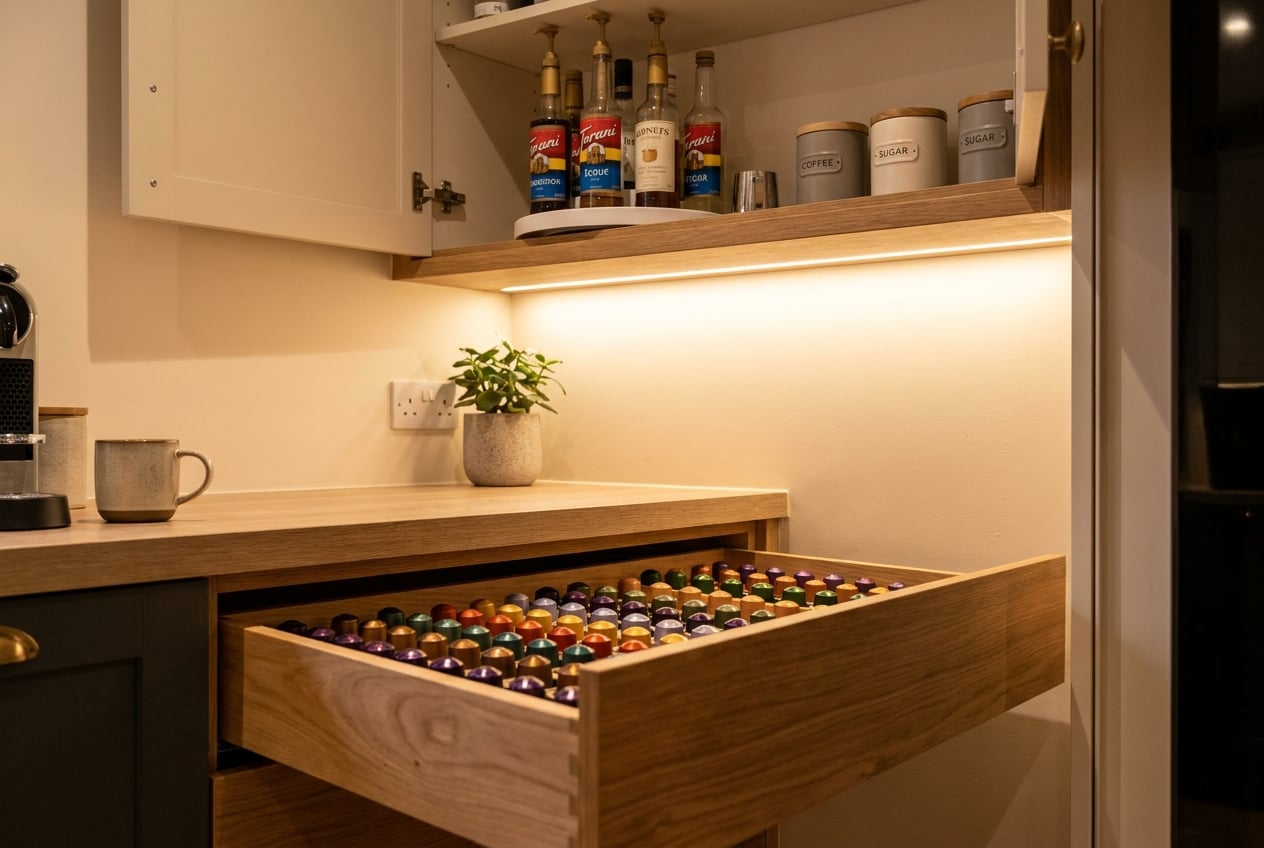
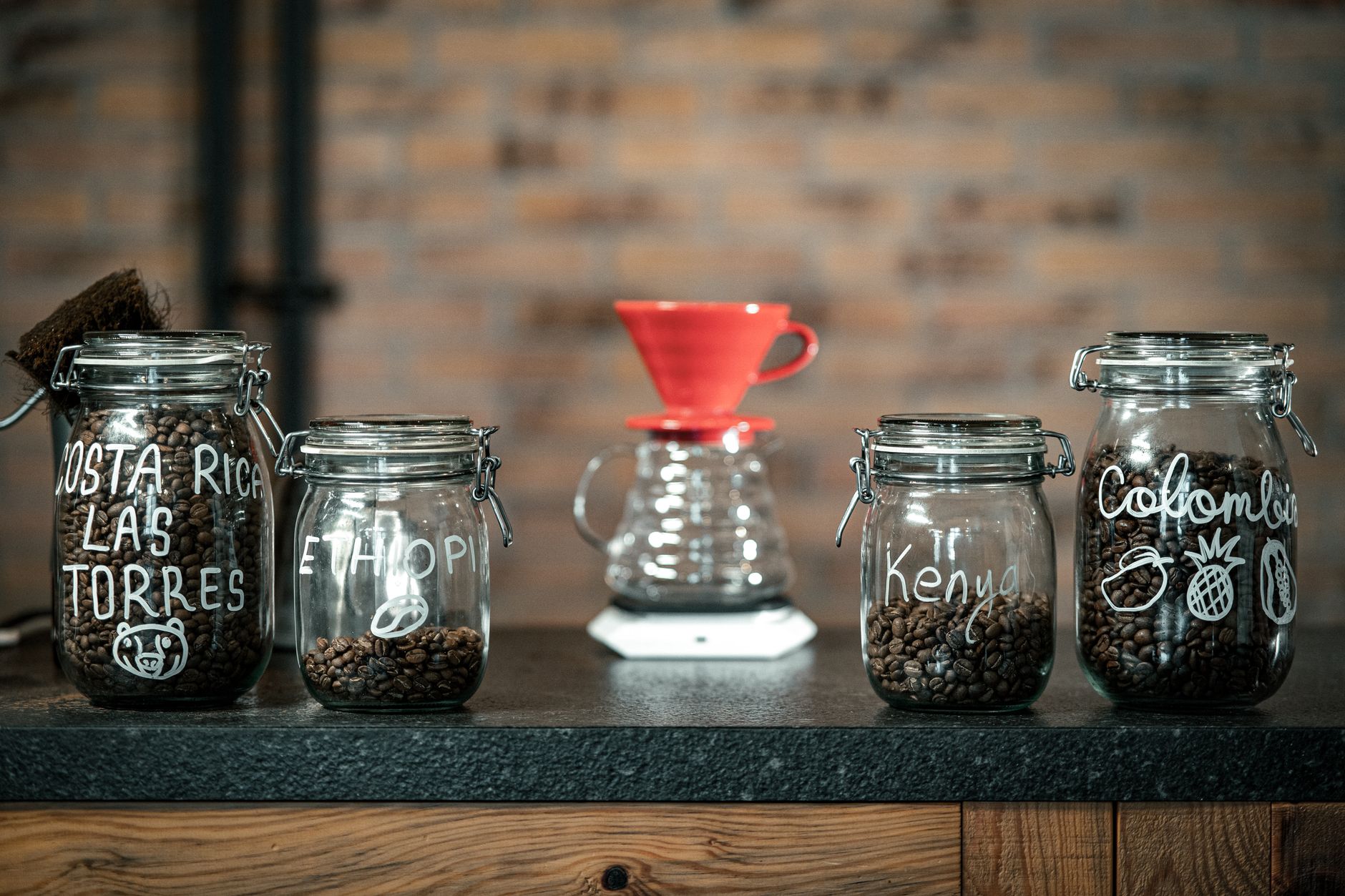
Beans into a lidded canister. Sugar into a matching one. Filters out of the box and into a drawer or a small holder. Pods, if pods are the format, into a drawer insert rather than the tower carousel, which occupies a full square foot and is visible from every angle. This is the highest-leverage change on the list, it costs the least, and it is the one most often skipped in favor of buying more furniture.
12. The one-trip test
The last filter for any renter-friendly coffee bar: if the lease ended in a week, what would it take to undo this. Everything on this list should come apart into things that fit in a car and a wall that needs nothing more than a wipe.
Adhesive hooks pull off with slow heat from a hairdryer and a steady angle. Peel-and-stick tile comes off the same way. A cart rolls. A shelf tower disassembles. What fails the test is drilled shelving, painted accent walls, hardwired under-cabinet lighting, and anything screwed into cabinet doors — all of which look fine for two years and then cost more than they were worth.
For layout thinking that applies whether or not you rent, see coffee bar ideas for small spaces, and for the smallest version of all — a station on a nightstand or a single shelf — mini coffee corner ideas covers the footprint below two feet.
Some links in this article are affiliate links — if you buy through them we may earn a commission at no extra cost to you. Details.