Coffee Bar Cabinet Guide: Types, Sizes, What Fits
A coffee bar cabinet has to handle outlets, steam, and machine clearance, not just storage. The sizing math plus 11 cabinet types that actually work.
Skip to the goods in this piece (8) ↓
A coffee bar cabinet has one job ordinary furniture doesn’t: it has to take daily heat, steam, water, and a power cord without turning into an appliance garage. Most pieces sold under that name are just buffets and sideboards with a mug staged on top, and the conversion works fine, but only if the depth, the shelf clearance, and the outlet situation line up first. What follows is the sizing math, then the cabinet types worth looking at.
Measure the machine first, then shop the cabinet
Almost every failed coffee cabinet fails on one of three numbers.
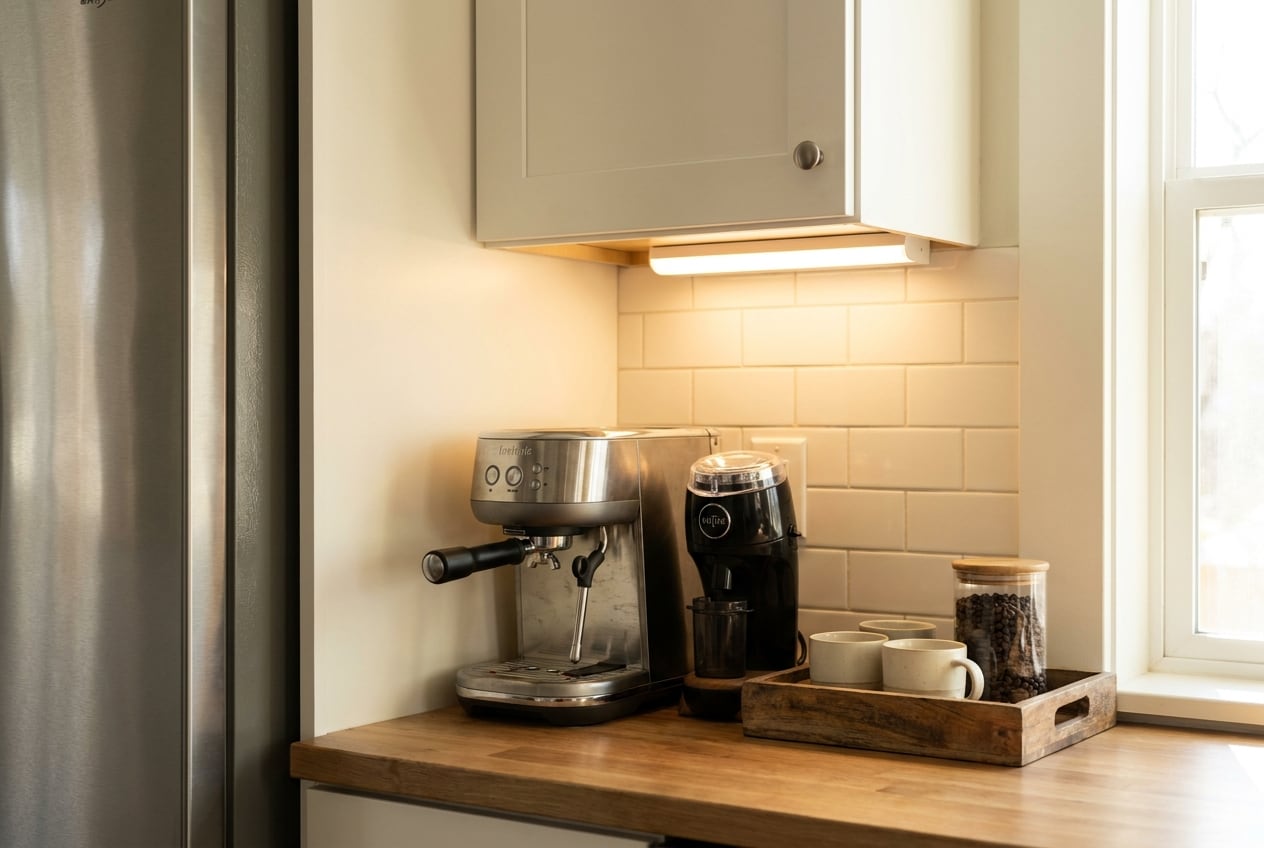
Height, measured with the lid open. Most 12-cup drip brewers stand 13 to 15 inches tall, and the reservoir lid hinges back another 4 to 6 inches. Semi-automatic espresso machines run roughly 13 to 16 inches, and once you account for lifting the water tank straight up and out, 17 inches of clearance under a hutch shelf is the practical floor. Superautomatic bean-to-cup machines are the tallest of the group and nearly all fill from the top.
Depth, measured with the tank handle up. Buffets and sideboards typically land between 16 and 20 inches deep. Kitchen base cabinets are 24. Console tables, at 12 to 16 inches, are usually too shallow to hold a machine and still leave a landing spot for the mug, which is the detail people discover after delivery.
Load. A prosumer espresso machine is 20 to 30 pounds, a burr grinder adds 6 to 10, and a full canister of beans is heavier than it looks. Ready-to-assemble shelving is often rated somewhere in the 35 to 50 pound range per shelf, and a particleboard shelf spanning more than 30 inches will bow under a machine within a year. Solid wood, a center support, or a shorter span solves it.
The outlet is what kills most conversions
Electrical is the constraint people plan around last and should plan around first.
A standard 15-amp household circuit tops out at 1,800 watts, and continuous-load rules bring the working ceiling closer to 1,440. A drip brewer pulls 900 to 1,500 watts. An electric kettle pulls 1,000 to 1,500. An espresso machine’s boiler is in the same neighborhood. Running two heating elements at once on a circuit that also carries the microwave is how you find out where the breaker panel is. The grinder is negligible by comparison, usually under 200 watts.
Placement matters as much as capacity. Kitchen counter outlets sit around 44 inches off the floor, which clears a 36-inch cabinet top. General-room outlets are centered closer to 16 inches, which means the cord has to travel up through the cabinet. The standard fix is a 2-inch or 2.5-inch hole cut in the back panel with a hole saw, finished with a desk cord grommet kit so it reads as furniture rather than damage. Mount a low-profile surge protector strip to the inside back panel with two screws — flat-plug versions matter here, because a bulky plug can hold the cabinet three inches off the wall.
If the cabinet stands on legs, run the cord down a back leg with adhesive clips instead of letting it cross open floor.
Closed storage, open storage, or both
Steam is the argument for open. A machine brewing inside a shut cabinet dumps moisture into a sealed box; particleboard swells at the edges and finishes cloud over. Either brew with the doors open, or put the machine on a pull-out sliding shelf so it clears the cabinet face before it runs.
Dust is the argument for closed. Anything on an open shelf in a kitchen collects a fine grease film within a few weeks, and mugs you don’t use weekly will need rinsing before they get used. The workable split, and what most people land on, is a closed base for backstock and the ugly tier, with open shelving above for the six mugs actually in rotation.
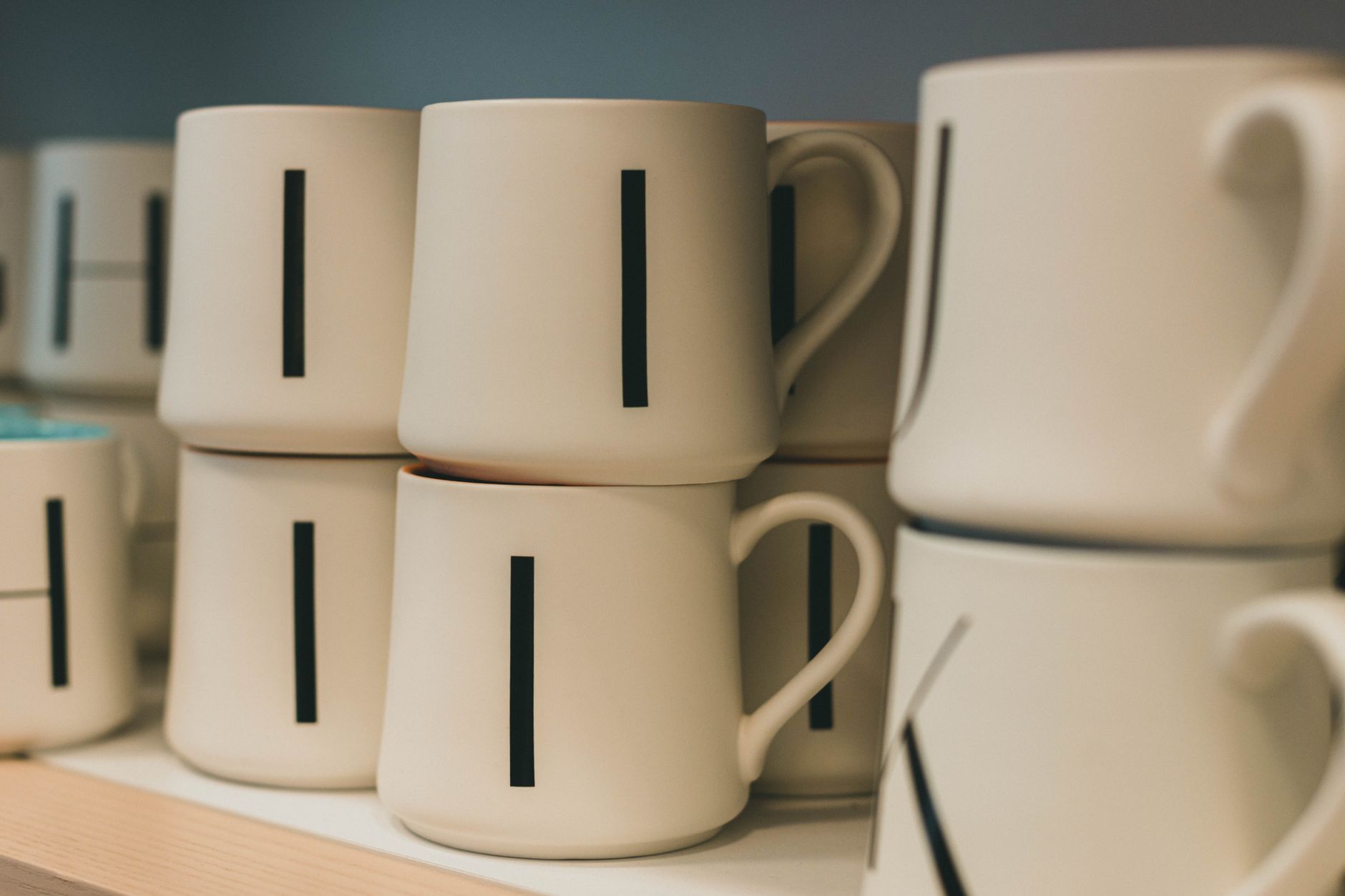
Buffet, sideboard, hutch, credenza: what the words mean
Retailers use these interchangeably, so the labels are only loosely useful, but the height differences are real.
- Buffet — long dining-room storage, usually 34 to 36 inches tall on visible legs.
- Sideboard — historically deeper and lower to the ground; today mostly a synonym for buffet.
- Hutch — a buffet with an upper shelving unit stacked on it, sometimes glass-fronted.
- Credenza — lower, roughly 28 to 32 inches, often mid-century with sliding doors.
- Console — 30 to 32 inches tall but only 12 to 16 deep. Decorative, not functional here.
Counter height is 36 inches for a reason. Anything under 32 makes tamping, pouring, and steaming a stoop, which is tolerable for a pod machine and irritating for espresso.
The buffet or sideboard conversion
The default, and the reason “coffee bar cabinet” is a search term at all. A 48- to 72-inch buffet gives you a long top with room to separate a brew zone from a serving zone, plus enclosed storage underneath for backstock. Look for adjustable interior shelves rather than fixed ones, a back panel you’re willing to drill, and a top that isn’t a thin veneer over particleboard — that top will meet hot water eventually. Solid wood or a laminate rated for heat holds up. Put non-slip shelf liner under the grinder so vibration doesn’t march it toward the edge.
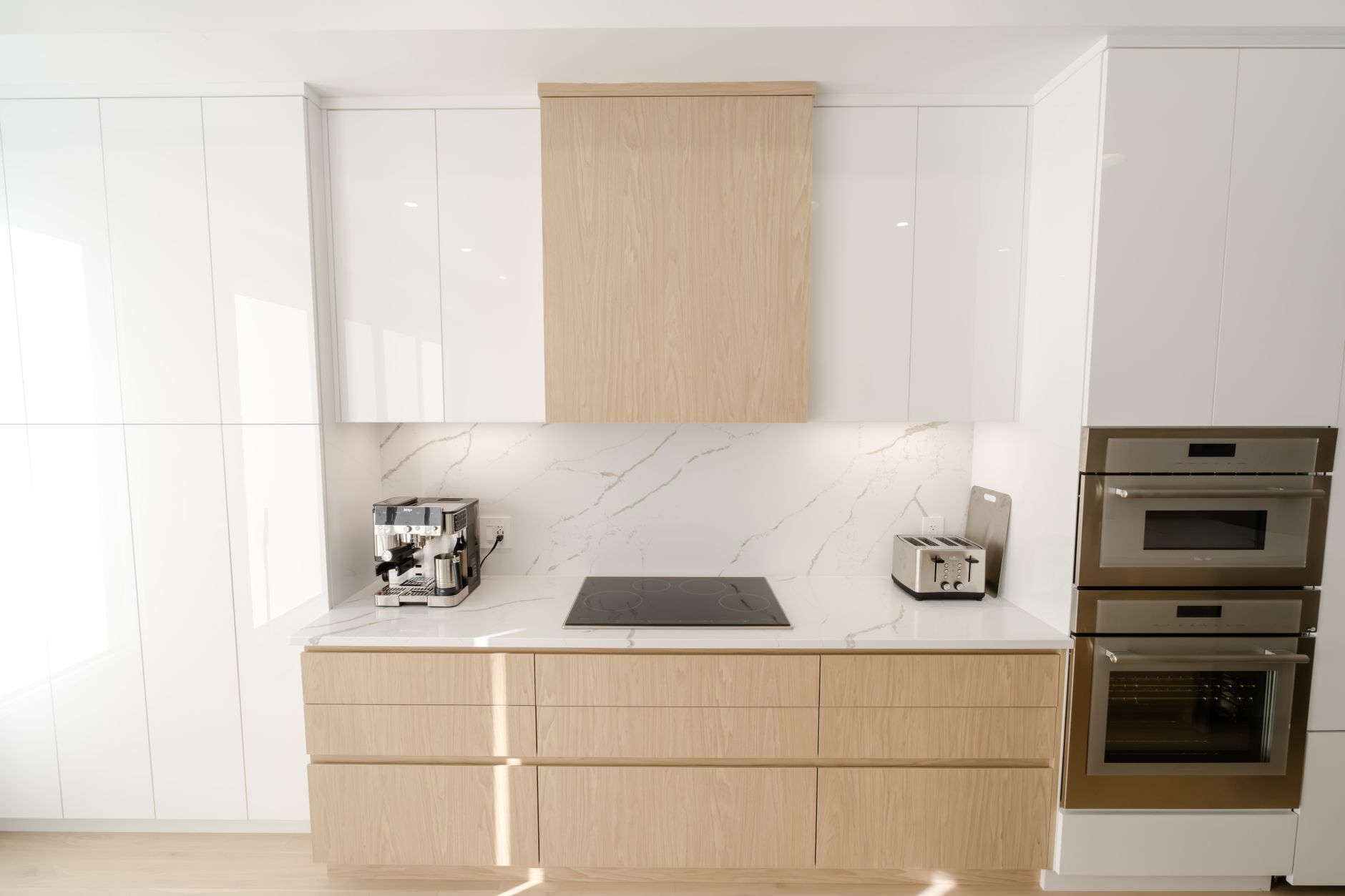
The hutch with an outlet cutout
A small but growing number of hutches ship with a factory cord cutout and sometimes a built-in outlet in the back panel. Worth paying attention to, because it means someone designed for an appliance instead of china. The number to check is the vertical gap between the cabinet top and the first upper shelf. Many hutches space shelves 12 to 14 inches apart, which handles a pod machine and rules out most espresso. Look for a first bay of 17 inches or more, or a shelf on adjustable pins you can move up.
IKEA hack candidates
The IKEA route is popular because the carcasses are expendable enough to cut into. A few dimensional realities worth knowing:
KALLAX cubes are about 13 inches square inside and the unit is roughly 15 inches deep — deep enough for mugs and pods, too shallow for most machines with the tank handle raised. BESTÅ frames come in a 15 3/4-inch depth, same limitation, but the 47-inch-wide frame makes a clean low run and the back panel is soft enough to cut cleanly. IVAR is unfinished pine at close to 20 inches deep, which is the friendliest of the group for a machine and takes stain or paint without primer drama. HEMNES sideboards are solid pine, which matters when you’re driving screws into the back panel to mount a power strip; particleboard strips out.
The standard hack sequence is the same regardless: cut the cord pass-through, mount the strip inside, add a butcher block top for heat tolerance, swap the hardware.
The farmhouse hutch
Painted, plate-railed, usually glass in the upper doors. The look is well covered in farmhouse coffee bar ideas, but the practical notes are specific: glass upper doors mean everything behind them is on display, so this piece rewards decanted canisters and punishes a pile of retail packaging. Antique hutches tend to be shallow up top — 10 to 12 inches — which suits mugs and plates and nothing electrical. Also check whether the upper section detaches; if it does, you can use the base alone at counter height and skip the ceiling clearance question entirely.
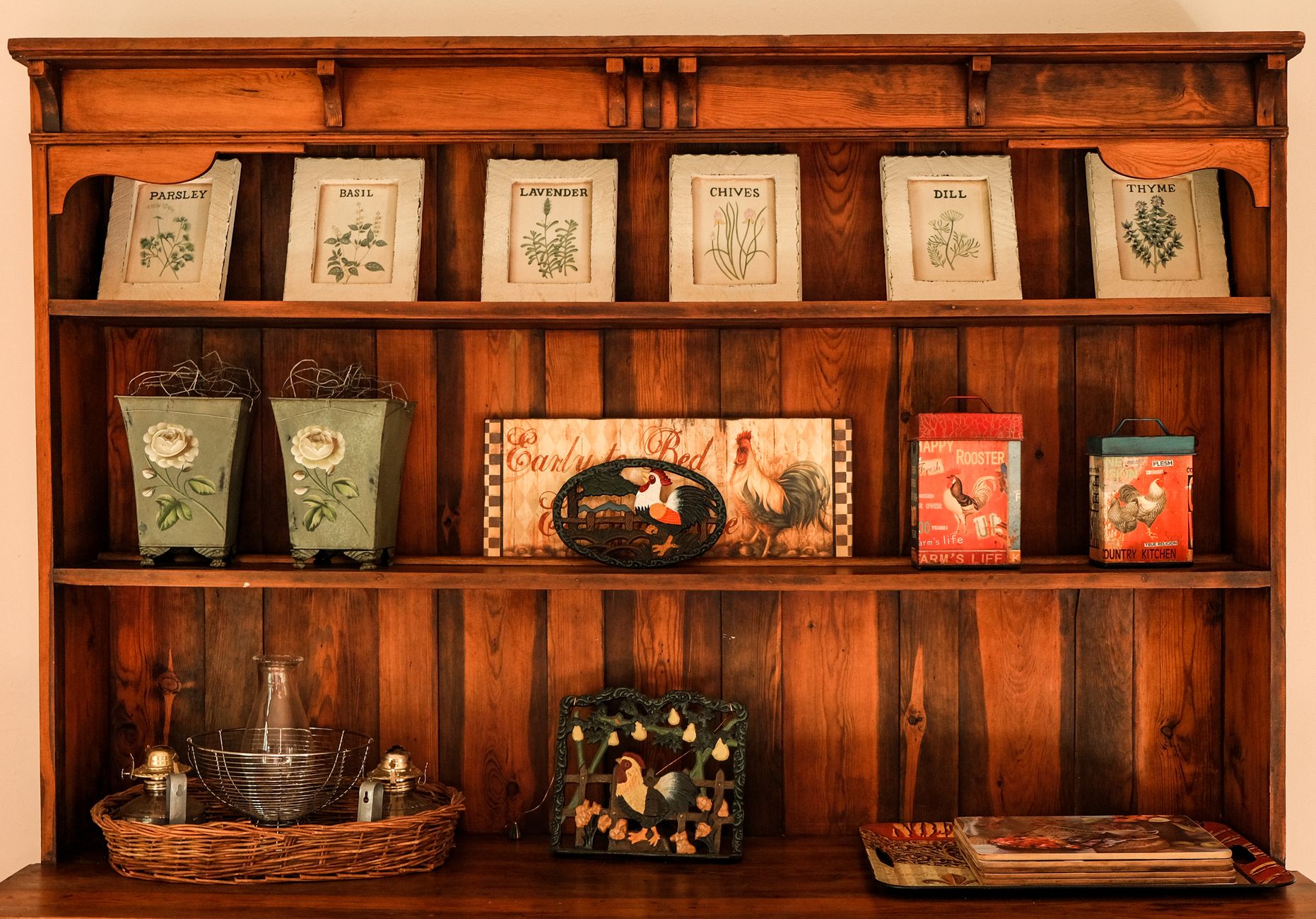
The modern credenza
Low, long, usually sliding doors or push-latch fronts. Visually the cleanest option and the one that photographs well against a plain wall. Two cautions. Sliding doors mean only half the cabinet is open at once, which is fine for storage and bad if you were planning to tuck the machine inside. And at 28 to 32 inches tall, a credenza puts the portafilter below comfortable working height. It’s a strong pick for pod and drip setups, a compromise for espresso.
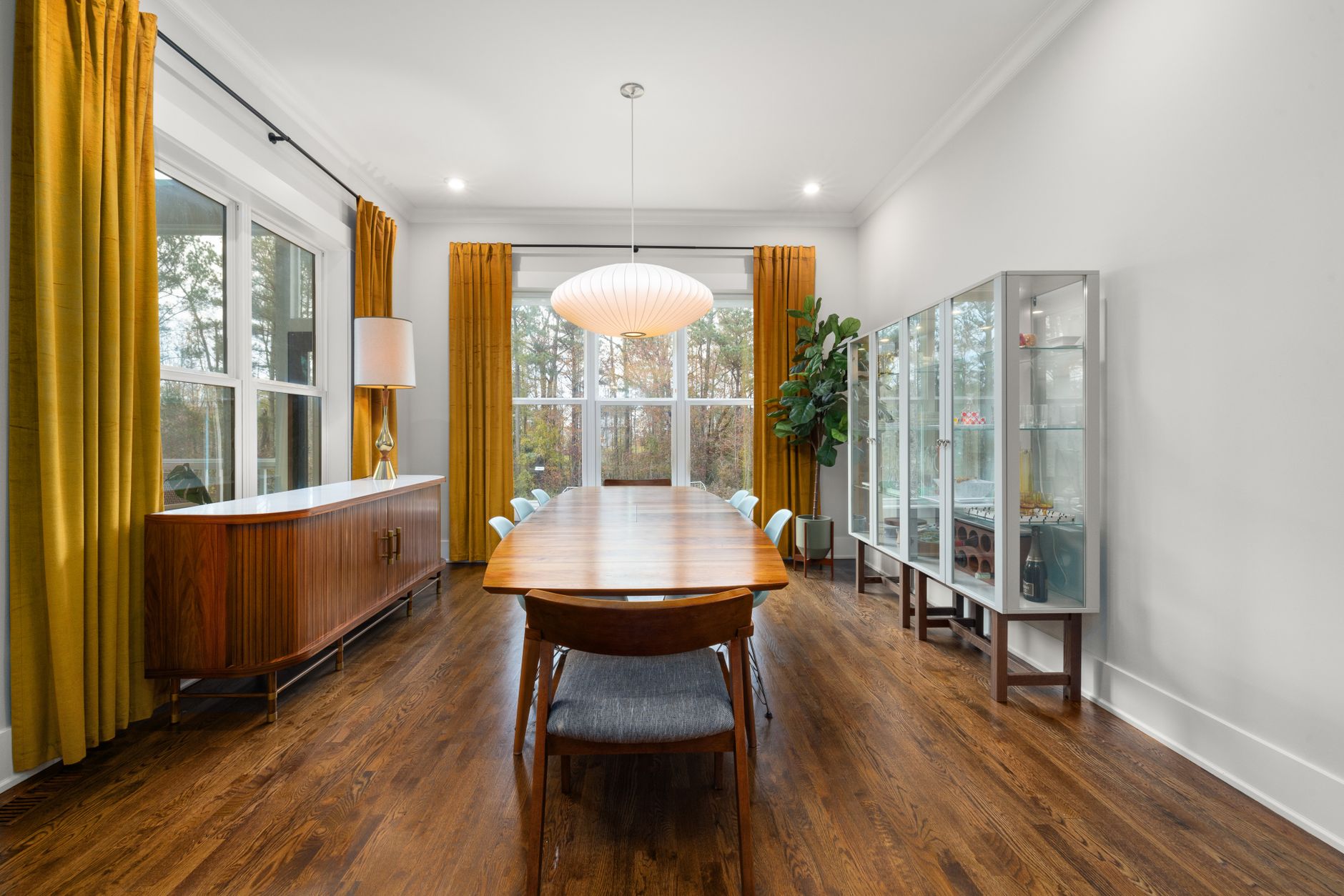
The corner cabinet
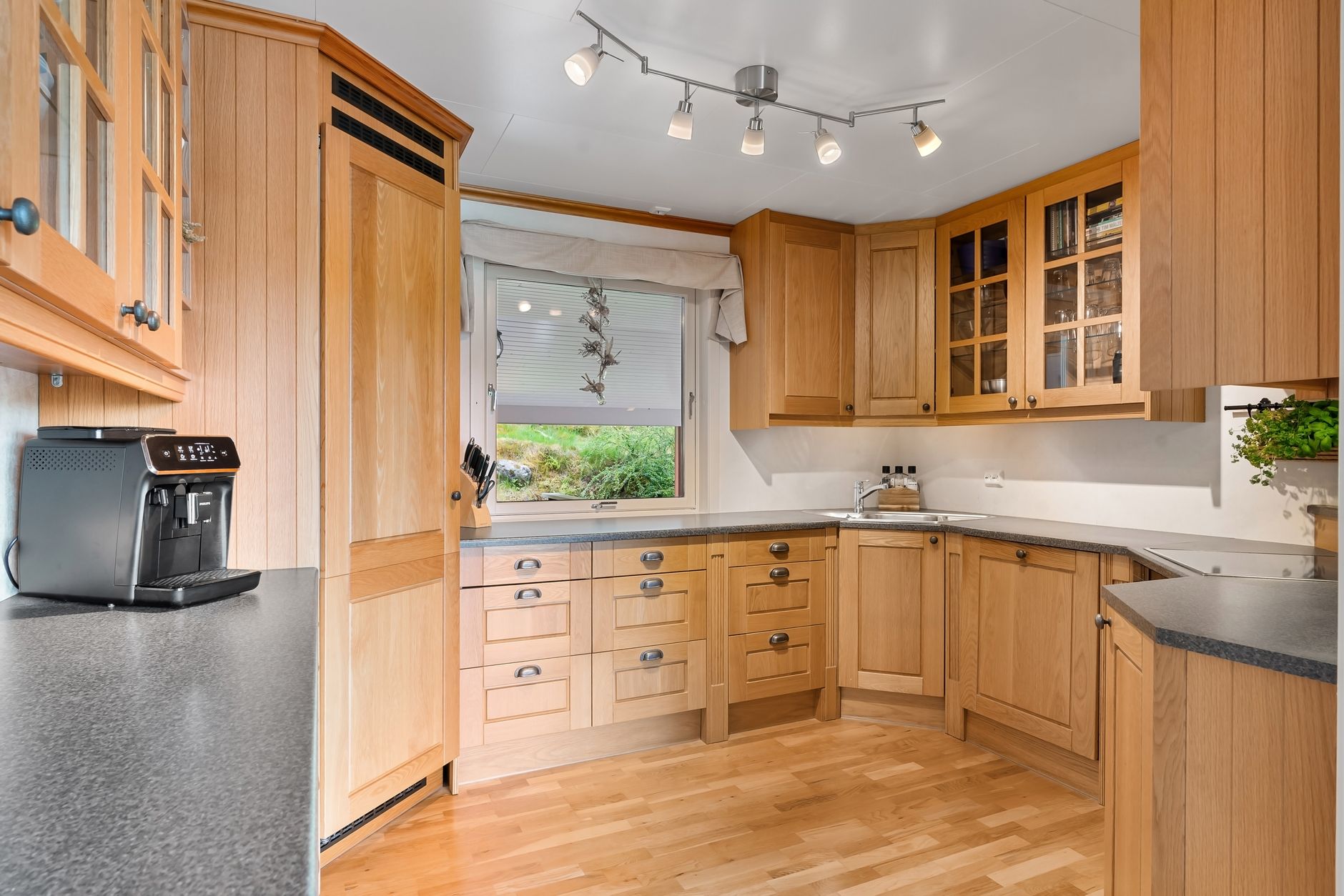
Corners are the most-wasted square footage in a kitchen and the hardest to shop for. Angled-back corner cabinets give you a wide usable top with a narrow footprint, but the depth is deceptive: the deepest point is the corner itself, and the front edge where you’d actually set a mug is often only 12 to 14 inches from the wall. Measure the usable strip, not the diagonal. Corner units also tend to be dim, which is what battery-powered motion-sensor LED strips exist for.
The armoire “hidden coffee bar”
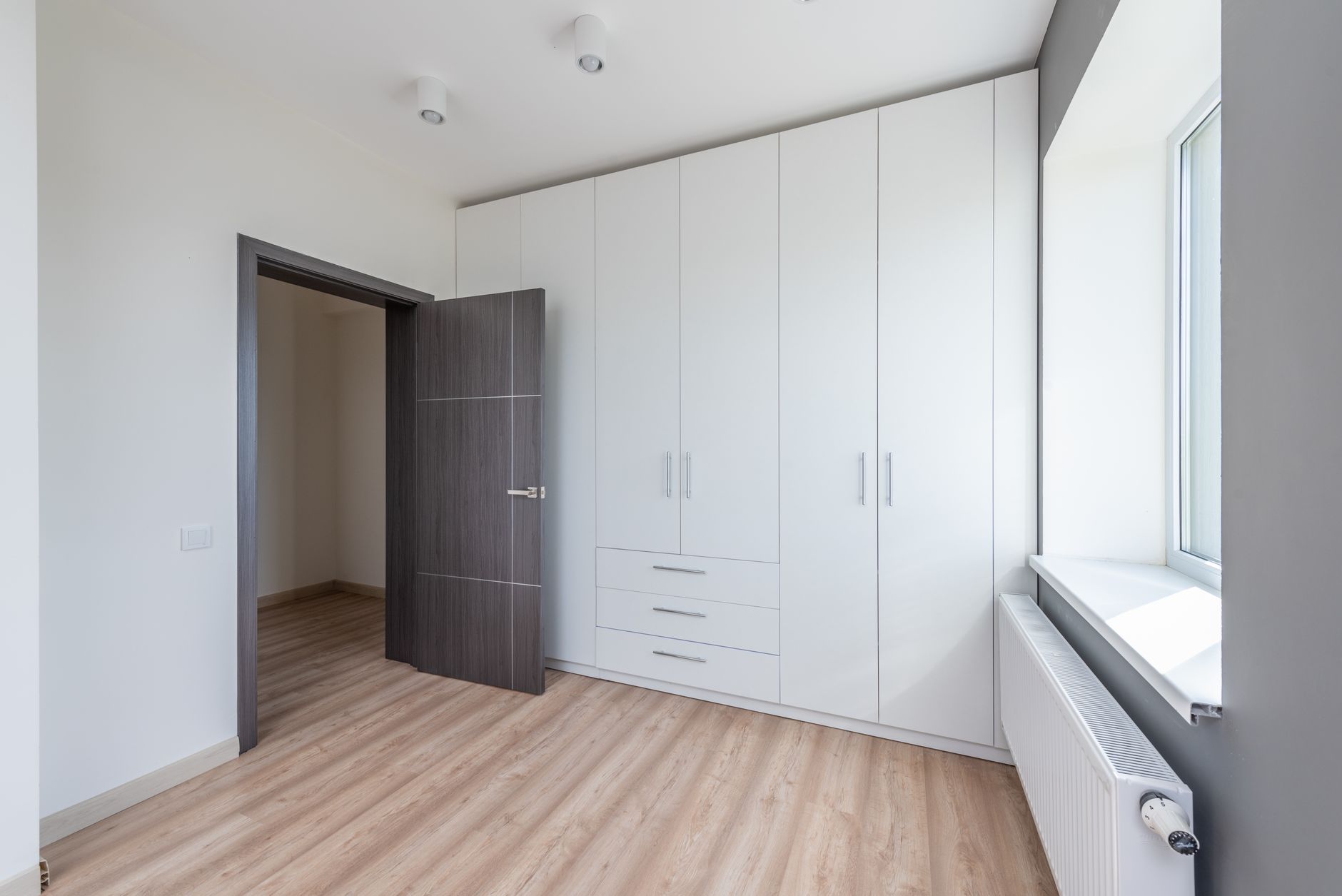
The one that makes the rounds on Pinterest: a tall wardrobe cabinet with the whole setup inside, doors closed when guests are over. It works, with conditions.
Doors need to open past 90 degrees, ideally to 180 or into pockets, or they block the machine you just opened them for. Interior depth should be 18 inches or better. The machine belongs on a pull-out shelf riding full-extension ball-bearing slides — the 100-pound-rated pairs, not the light-duty ones — so brewing happens outside the box. Cut a vent or leave the back partially open; sealed cabinets and steam are a bad pairing over time. And because an armoire is tall with weight up high, use an anti-tip furniture anchor into a stud. That’s not optional in a house with kids.
The bar cabinet, converted
An actual bar cabinet is closer to purpose-built than most furniture people repurpose. It usually already has a lined or metal-topped serving surface, stemware racks, a bottle section, and sometimes interior lighting on a switch. Stemware slots hold mug handles nearly as well as glass stems, and the bottle cubbies take syrup bottles without modification. The catch is width — bar cabinets tend to be narrow, 30 to 40 inches, so it’s a one-machine surface. If you’re keeping wine in it too, an under-shelf stemware rack added to the upper bay buys back the space the coffee gear takes.
A single kitchen base cabinet, built in
If you’re already renovating, one 24-inch-deep base cabinet with countertop, a dedicated outlet, and a pull-out shelf beats every freestanding option. It’s also the only version that gets the machine on a circuit of its own. The relevant spec is the appliance garage: a tambour or lift-up door needs about 18 inches of vertical space to hide a machine, and the outlet must be inside the garage, not behind it.
The rolling cabinet
A cabinet on locking casters is the answer for renters and for anyone whose only free outlet is across the room. It’s the same category covered in coffee cart ideas, scaled up: enclosed storage, a solid top, and wheels rated for the loaded weight. Lock the casters before you tamp anything.
The wall cabinet above a counter run
Not a cabinet you set things on — a cabinet you hang above the ones you do. Useful when floor space is spoken for, which is the situation most small-space coffee bars start from. Standard clearance between countertop and wall cabinet is 18 inches; that’s enough for a pod machine and not enough for much else, so the wall cabinet holds beans, filters, and mugs while the machine lives on the counter. An adjustable shelf riser inside doubles the mug capacity of a single tall bay.
Before you buy: the five numbers
Write these down and take them shopping.
- Machine height with the lid open and the tank lifted clear.
- Machine depth with the tank handle raised, plus 2 inches of breathing room.
- Distance from the cabinet’s intended spot to the nearest outlet, and what else is on that circuit.
- Interior shelf span, and whether the shelf is solid wood or particleboard.
- Doorway and stair clearance, because buffets are wider than they look on a product page.
Once the cabinet is in place, the setup question shifts from furniture to contents — the machine, prep, and serving layers covered in coffee bar essentials, and the drawer and canister systems in coffee station organization.
Some links in this article are affiliate links — if you buy through them we may earn a commission at no extra cost to you. Details.