Fall Coffee Bar Ideas: 12 Restrained Ways to Style It
Twelve fall coffee bar ideas that stop short of clutter: a three-color palette swap, mini pumpkins with a count limit, amber canisters, and a syrup station.
Skip to the goods in this piece (6) ↓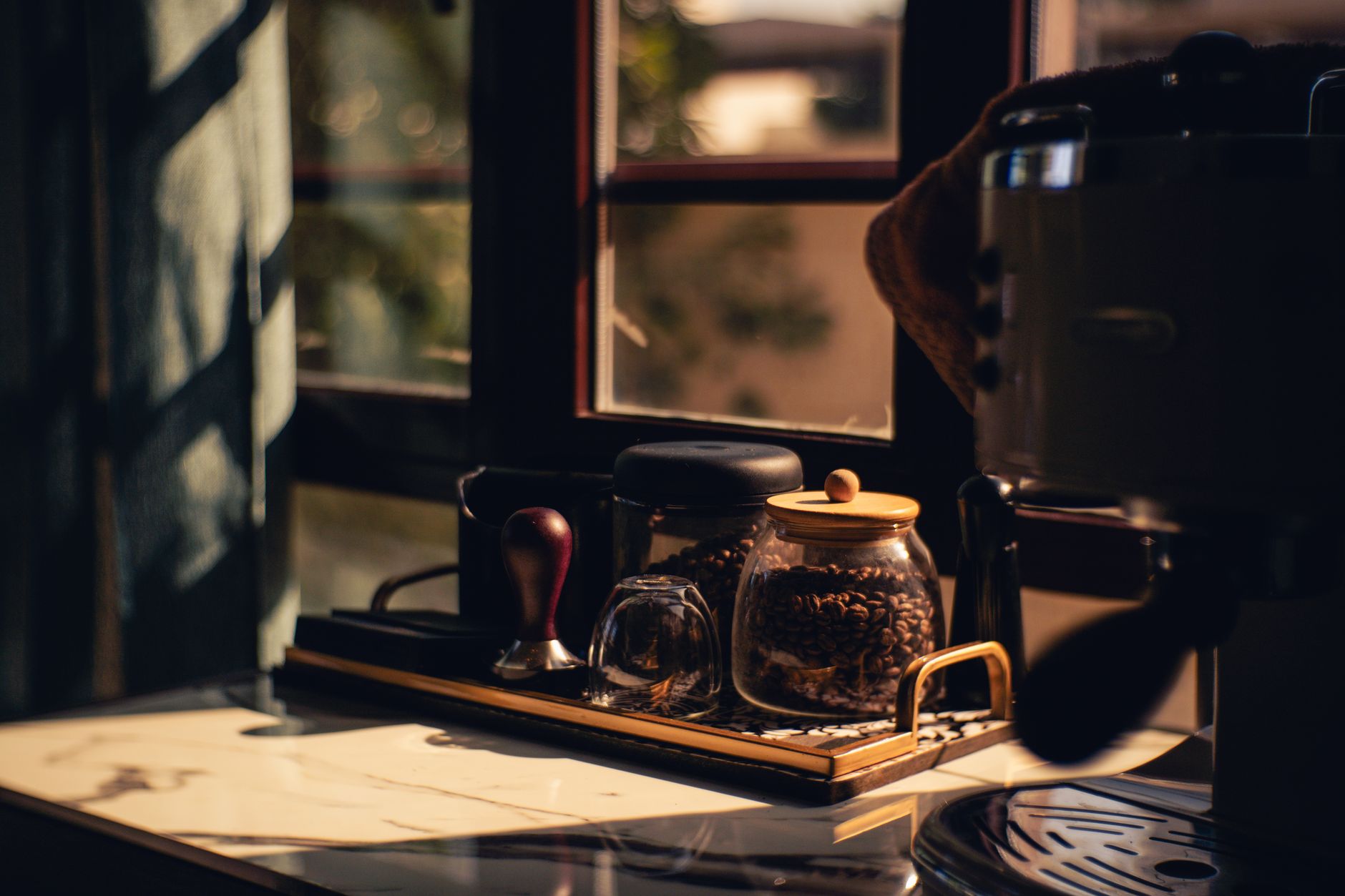
Most fall coffee bar ideas fail in the same direction: too much added, all of it orange. The setups worth copying change three or four things and leave the rest of the counter alone. Twelve of those changes are below, ordered roughly by how much they disturb.
1. Swap the palette before you add a single pumpkin
Fall on a counter is a color problem first, an object problem second. Keep whatever neutral base already exists — white mugs, wood, stainless — then introduce exactly two warm notes: one mid-tone (caramel, rust, ochre) and one dark (espresso brown, black-green, oxblood). Three colors total, counting the base.
Anything past that stops reading as a decision and starts reading as accumulation. Textiles are the cheapest place to run the swap, because they undo in a second: a linen towel over the handle, a runner under the machine, a liner in the tray.
Which warm tone to pick is mostly decided by the kitchen already. Rust and terracotta sit well against warm woods and cream cabinets. Ochre and mustard need a cooler backdrop — white, gray, black hardware — or they turn muddy. Deep plum and oxblood are the underused option and read more like late October than orange does, which is the direction most fall coffee bar decor should be heading anyway.
2. Mini pumpkins, counted
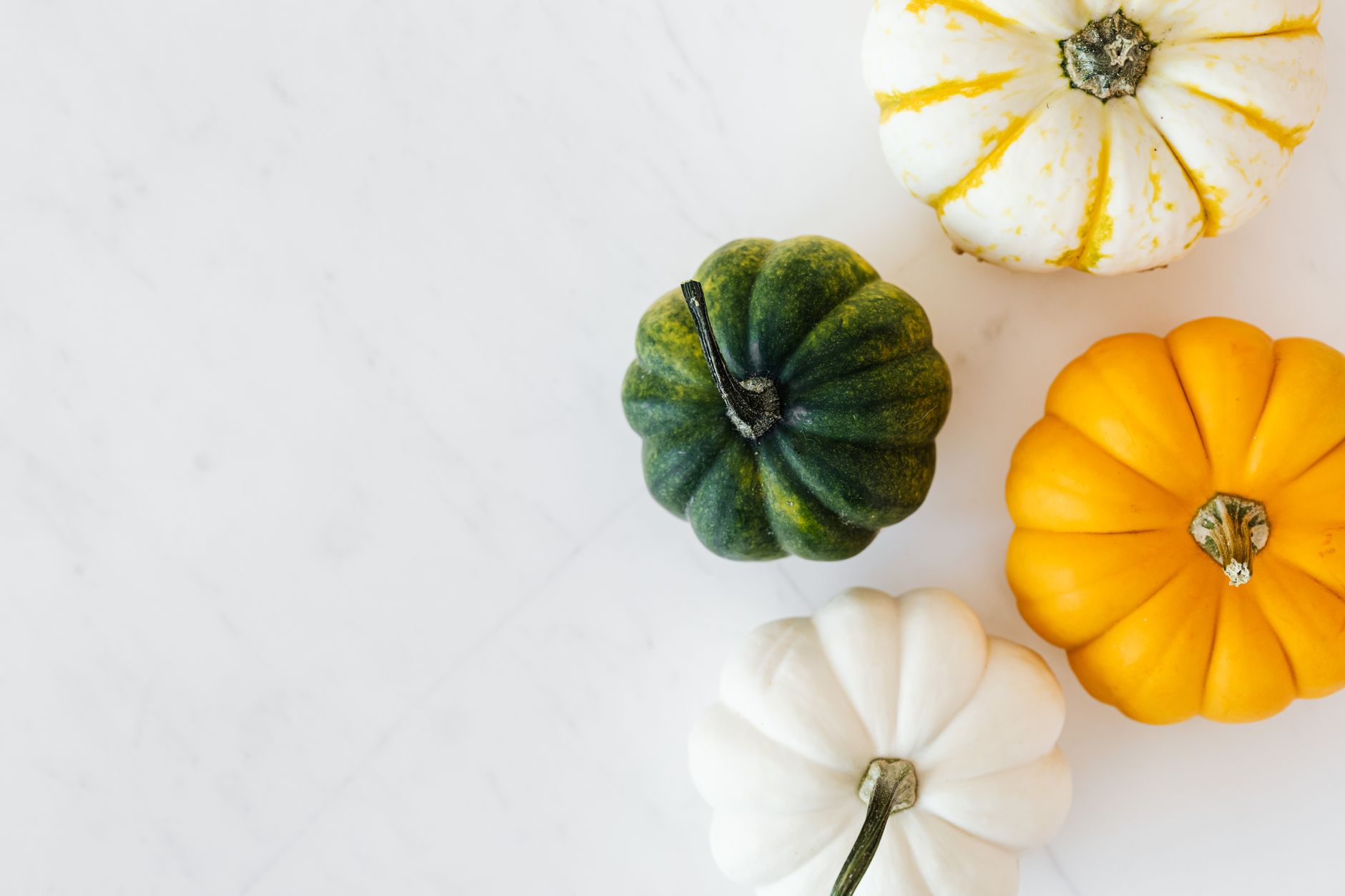
Three. Odd numbers, under four inches across, grouped at one end instead of distributed across the whole run. The common failure is one pumpkin per surface, evenly spaced, which reads like garnish on every plate.
Put the cluster at the end opposite the machine, where nothing functional happens, and leave the working half of the counter completely clear. The white and pale-green varieties — Baby Boo, Casperita — sit better against stainless and white subway tile than the bright orange ones do. Real gourds hold up through November in a cool kitchen and cost almost nothing at a grocery bin.
3. Give the whole season one tray
A tray is a border. Everything seasonal goes inside it; the counter outside it stays as it was in July. That single rule does more for a fall coffee station than any object you can buy for it.
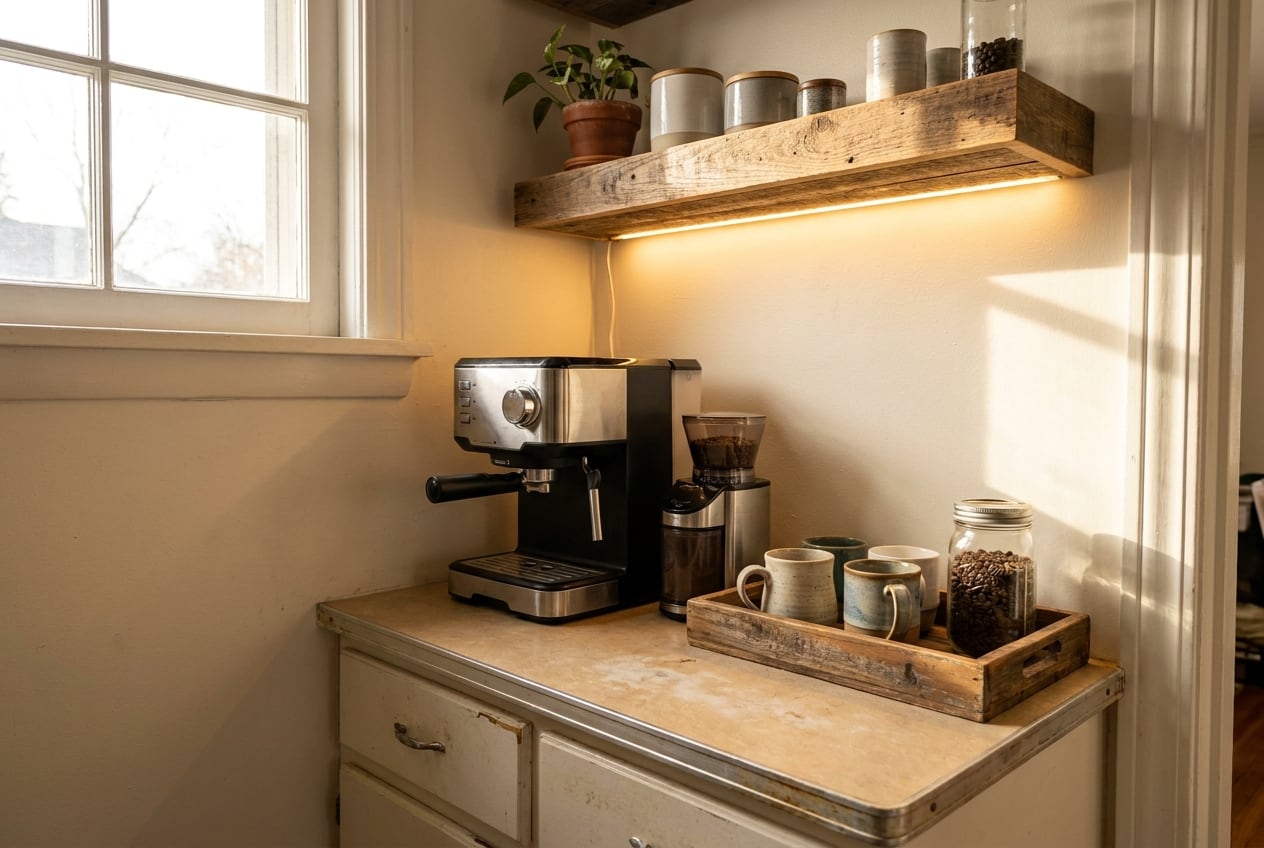
A wood tray around 12 by 18 inches holds a syrup bottle, a small vessel of spice, and a pair of mugs without looking packed. Wood or dark-stained rattan for a warmer read; lacquered black if the kitchen already leans modern. A raised lip is worth having, since the tray is also going to catch grounds. Line it with a folded plaid cotton runner and the pattern quota for the season is met in one move — no plaid towel, plaid tin, and plaid sign compounding on each other.
4. Trade clear canisters for amber
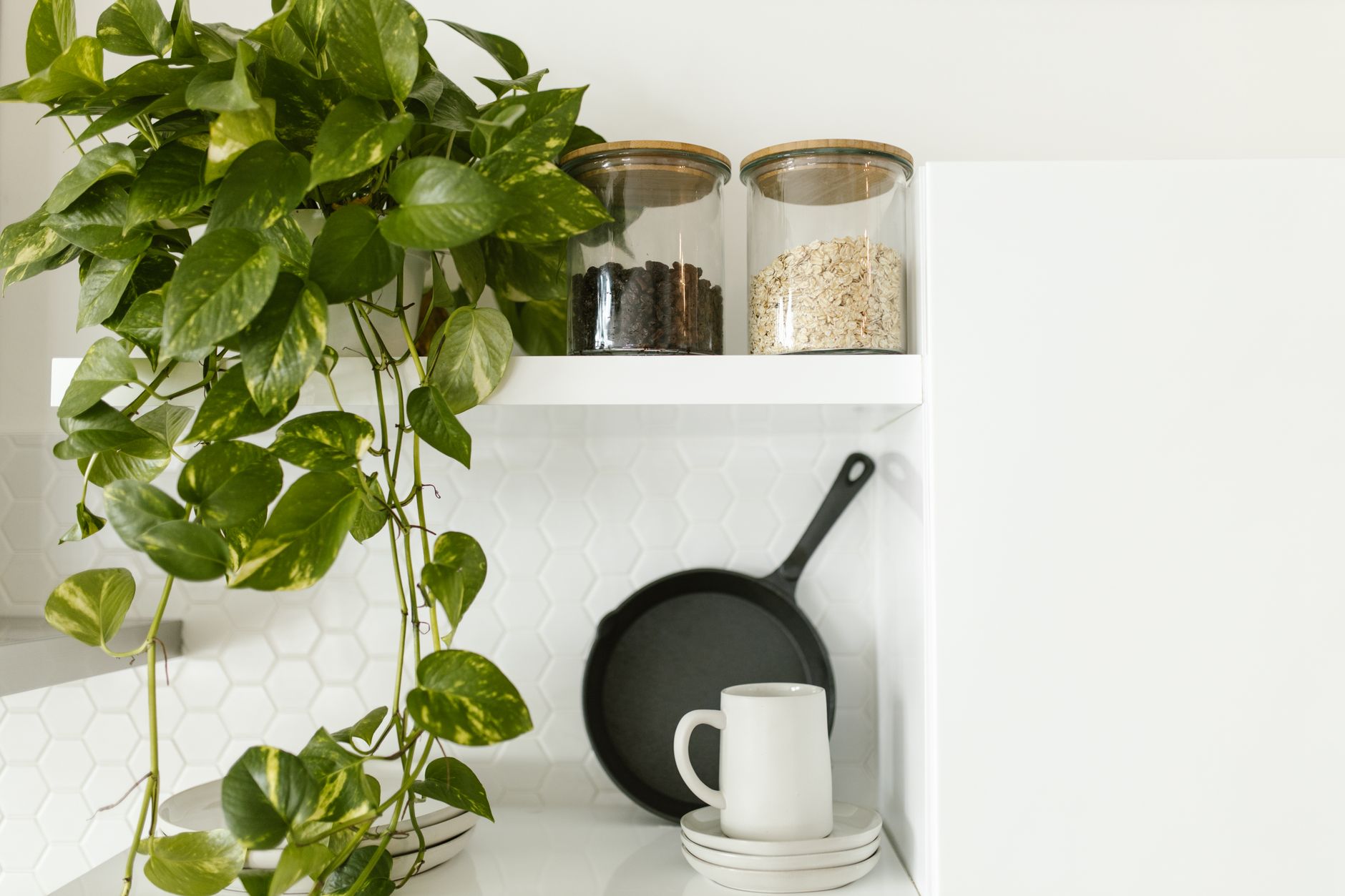
Clear glass shows every scoop line and every uneven bean level. Amber and smoked glass hide both, throw a warm cast under kitchen light, and have the side benefit of shielding beans from the light that dulls them fastest.
A pair of matched amber glass canisters — one for beans, one for whatever gets used daily — is the closest thing here to a free upgrade. It reads seasonal without adding a single decorative object, and it survives into winter when the pumpkins go.
5. A syrup station with a hard cap
Three bottles. Not seven. The whole appeal of a seasonal syrup setup is that it looks like a small bar, and a small bar has a short list.
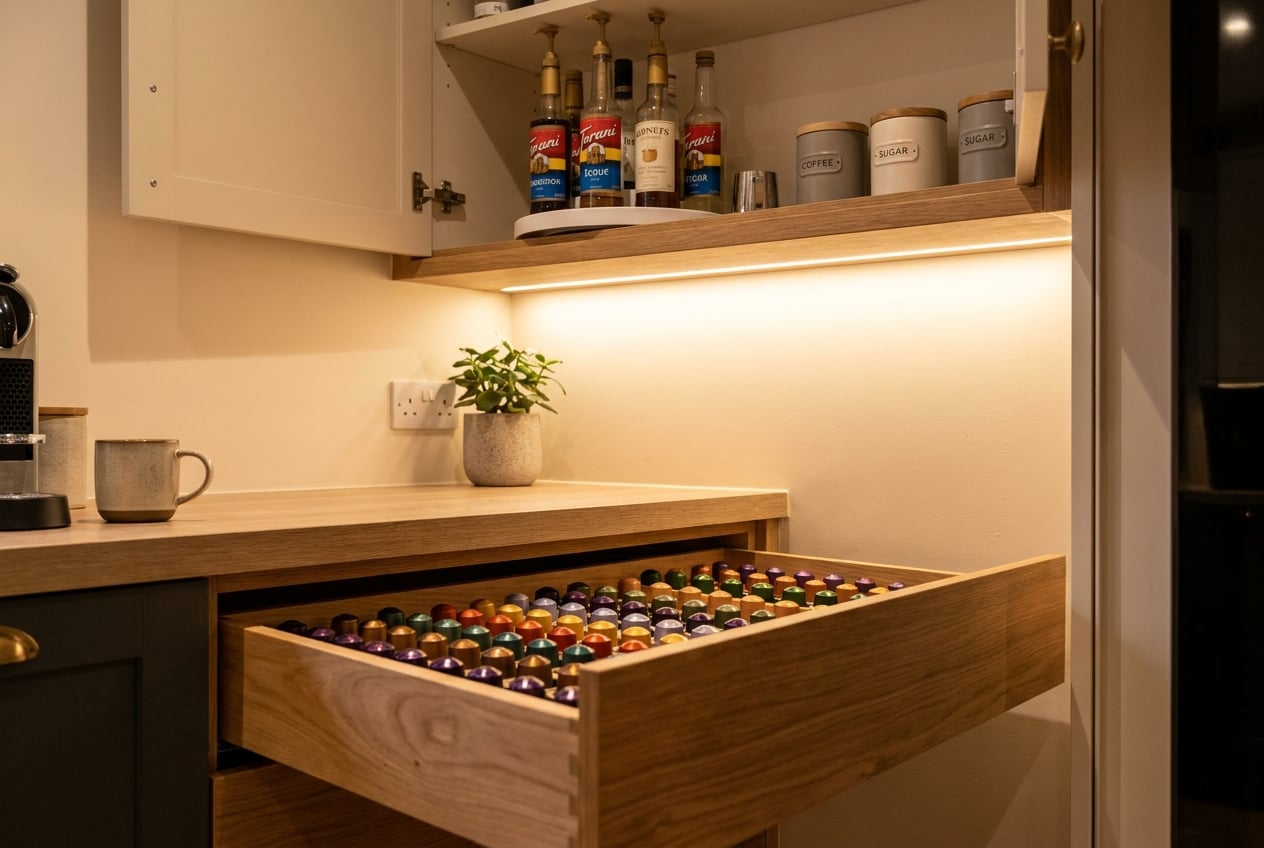
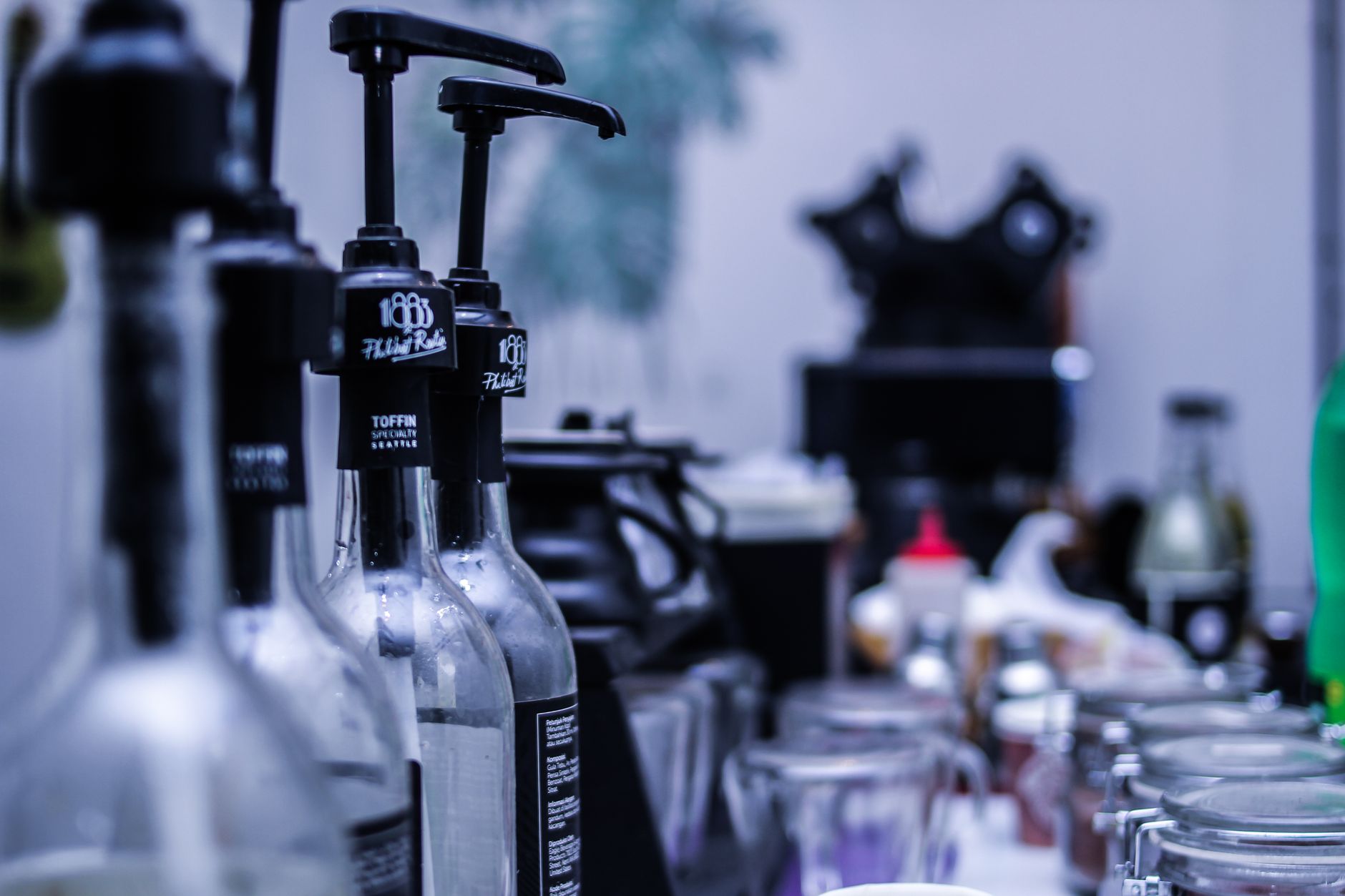
Decant into matching glass pump bottles — the printed labels on retail bottles are the actual clutter, not the syrups. Maple, brown sugar, and one spiced option covers the season honestly. Group them shoulder to shoulder rather than spread out; three bottles in a row look intentional, three bottles scattered look like leftovers.
Two practical notes. Homemade syrups without preservatives belong in the refrigerator, which means the display version needs to be a small bottle refilled often rather than a large one left out for six weeks. And pump throats vary — check that the pump reaches the bottom of the bottle before committing to a set, because a pump that stops two inches short turns the last of every batch into a pouring job.
6. Rotate the mugs and store the rest
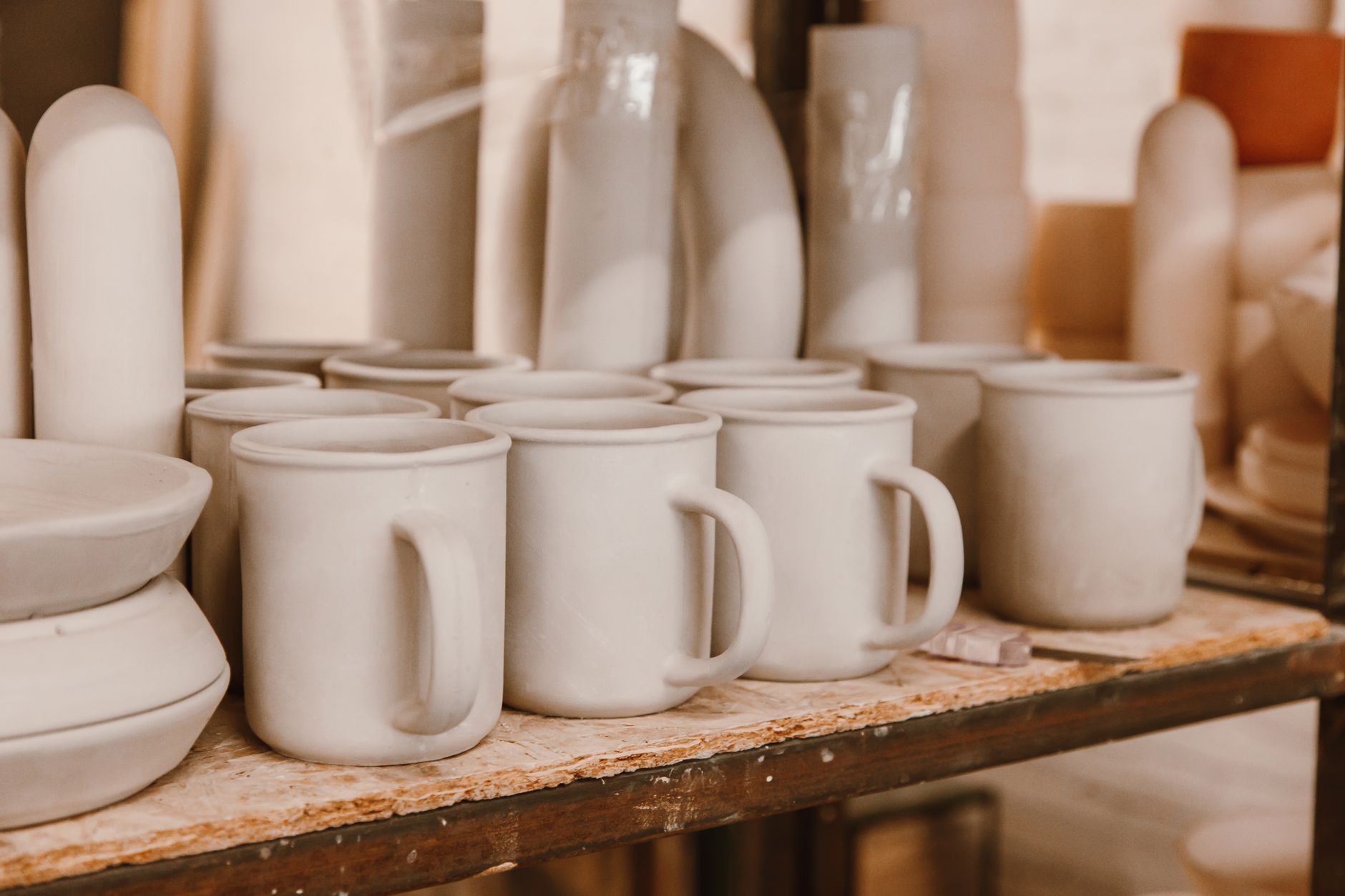
Summer glassware and thin white porcelain go in the cabinet. Out come the heavier bodies: speckled stoneware, matte glazes, anything in the brown-to-oatmeal range.
This is the rare seasonal change that is also functional. A thick-walled stoneware mug holds temperature noticeably longer than a thin cup, which matters more in October than it did in June. Six on the shelf, the rest out of sight. A shelf with fourteen mugs on it never looks styled, in any season.
7. Garland: one run, one edge
Garland is where fall coffee bar decor most often goes wrong, and the fix is arithmetic. One run, along one edge — the front lip of a floating shelf, or the top of the cabinet above. Never draped around the machine, never looped across two planes.
Six feet is plenty for a standard shelf; nine feet on a four-foot run turns into a swag, and a swag turns into a photo prop. Keep every part of it at least a hand’s width from the kettle, the toaster, and anything else that vents heat. Faux garland near a heat source is a genuinely bad idea, not a style opinion.
8. Dried, not faux
Dried stems age in the right direction. Faux foliage looks worse each week under kitchen light, and by mid-October the plastic sheen is visible from across the room.
Wheat is the reliable one — a tight bundle in a short, heavy vase, cut so the stems clear the rim by about the height of the vase itself. Dried hydrangea works if the color has gone papery brown rather than staying artificially blue. Eucalyptus is a stretch for autumn but forgivable. Skip anything spray-painted; the finish reads instantly.
9. Warm the light before you warm anything else
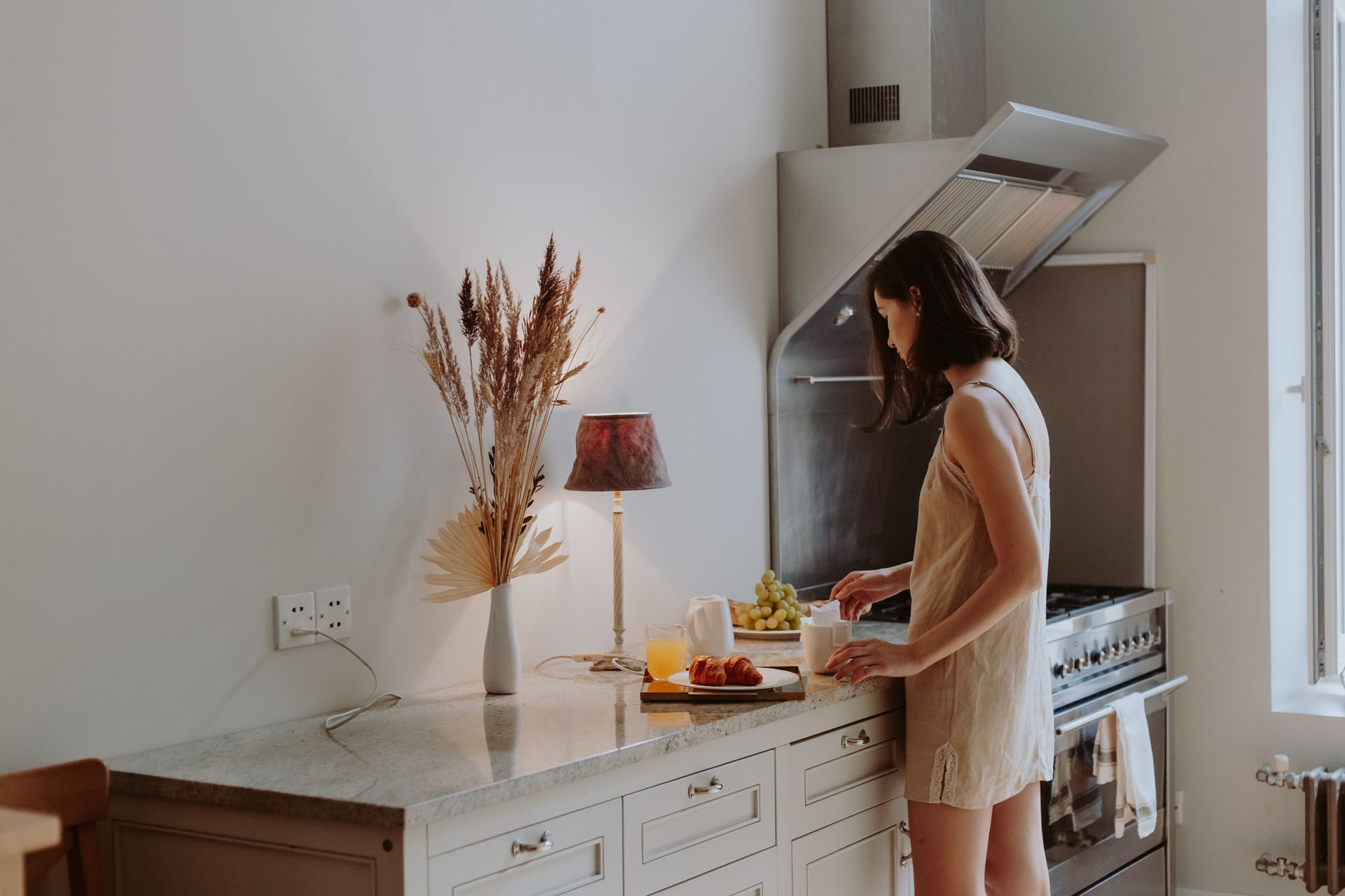
Most kitchens are lit at 3500K or higher, which flattens brown and makes wood look gray. Dropping to a 2700K bulb over the coffee station does more for the mood than every object on this list combined, and it costs one bulb.
If the fixture is hardwired and unchangeable, add a second light source at counter height instead: a small plug-in lamp, a rechargeable puck under the upper cabinet, a clip light aimed at the backsplash. Warm, low, and off to one side. Overhead-only lighting is the reason so many counters photograph badly — the light comes from behind the person standing at them, so everything worth looking at sits in a shadow.
10. One spice vessel, not a spice display
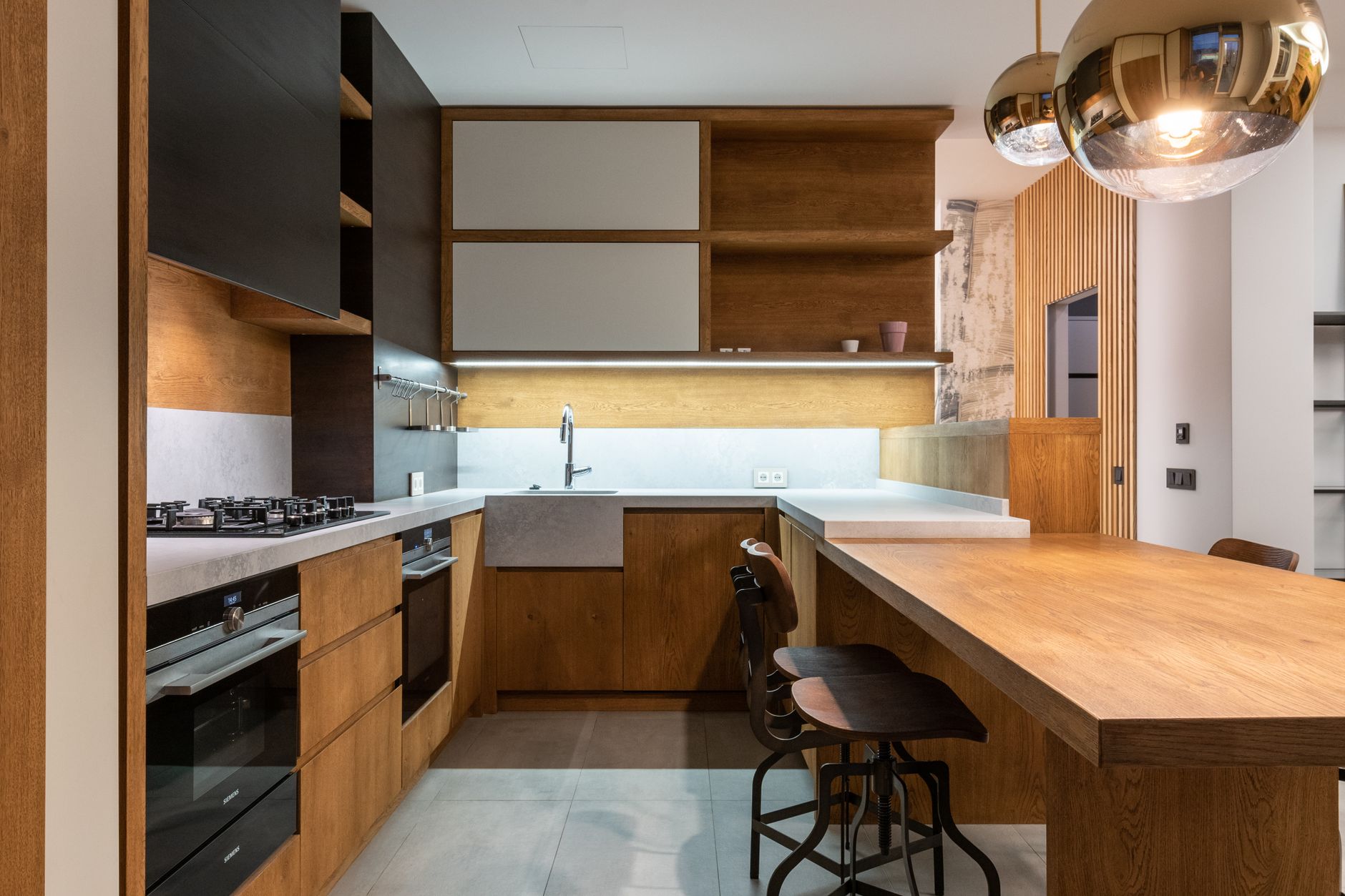
Cinnamon sticks in a small footed dish. A nutmeg or two with a grater beside them. That is the entire seasonal spice presence, and it is enough.
The version to avoid is the tiered rack of matching tins labeled in script — pumpkin spice, chai, cardamom, five more — where most of the jars will still be full in March. Whole nutmeg keeps its character for a year or better; the pre-ground jar bought for one October drink is flat by the next one. Buy the small quantity, use it, and let the seasonal spice presence be genuinely small.
11. Texture is what people are actually describing
When a fall coffee bar gets called cozy, texture is usually doing the work and color is getting the credit. Matte over gloss. Unfinished or oiled wood over lacquer. Linen with a visible weave over smooth cotton. Ribbed or hammered glass over plain.
Three textured surfaces in the frame is the threshold where a counter stops looking like a product shot. Beyond about five it starts to look like a craft fair booth, so the range is narrow.
12. Build it so November is an edit, not a rebuild
The best argument for restraint is what happens after Thanksgiving. A station built from a palette swap, a tray, dried stems, and warm light converts to winter by removing the pumpkins and changing the runner. Ten minutes.
A station built from a pumpkin-print sign, an orange garland, a leaf-shaped tray, and a chalkboard menu reading “Fall Y’All” has to be demolished and rebuilt, because every piece of it is calendar-specific. Buy the seasonal things that are only seasonal by color, and keep the structural pieces — canisters, tray, mugs, lighting — neutral enough to run year-round.
If you only do three
Change the bulb to 2700K, put a tray under everything seasonal, and cap the pumpkins at three. That combination gets ninety percent of the effect and survives contact with a working kitchen, which most autumn coffee bar decor does not.
One note on timing: the swap lands better when it tracks the weather rather than the calendar. Amber glass and stoneware in early September, when it is still eighty degrees out, look like a store display. The same objects in the first cold week look inevitable.
For the underlying setup that all of this sits on top of, see the guides to coffee bar essentials and coffee station ideas for a kitchen counter. If the warm-wood-and-stoneware direction is where you want to land permanently rather than seasonally, the farmhouse coffee bar approach covers it without the calendar.
Some links in this article are affiliate links — if you buy through them we may earn a commission at no extra cost to you. Details.